This post contains affiliate links. As an Amazon Associate, I earn from qualifying purchases — at no extra cost to you.

Showing posts with label Home Decor. Show all posts

Saturday, June 1, 2024

The Ultimate Guide to the Best Blackout Curtains for Nursery

Best blackout curtains for nursery

A truly dark room is one of the simplest ways to protect a baby's daytime naps

Babies don't read clocks, but their bodies read light — and a nursery that's even partially bright during a 2pm nap can be the difference between a 45-minute nap and a two-hour one. Blackout curtains solve a problem regular curtains can't: they block the kind of ambient daylight that regular blinds or sheer panels let through, keeping the room dark enough for a baby's circadian rhythm to settle into an actual sleep pattern. We compared eight well-reviewed nursery blackout curtains on real, checkable details — light-blocking performance, material, thermal insulation, and genuine standout features — rather than repeating the same marketing language every curtain brand uses.

Quick verdict: for most nurseries, the Eclipse Kendall is the safest bet with its documented 99%+ light-blocking rate. If you want a stylish, layered look, the PONY DANCE Blackout Curtains with Sheer pairs a decorative sheer overlay with real blackout performance underneath. For playful nursery decor on a budget, the Amazon Basics Kids curtains combine solid function with fun prints.

What Actually Makes a Curtain "Blackout"

Not every curtain labeled "room darkening" or "blackout" performs the same in practice, and the terminology gets used loosely across the industry. True blackout curtains use a tightly woven or specially coated fabric — often triple-weave polyester or a foam or silver-coated backing layer — designed to block essentially all direct light, not just dim it. "Room darkening" curtains, by contrast, typically block 80-99% of light but still let some glow through, which matters less for a living room and quite a lot for a baby's 1pm nap in July.

Triple-Weave Fabric

Three tightly woven fabric layers block light without any coating. Common in budget-friendly options; slightly less thermal benefit than coated designs.

Foam or Silver-Backed

A coated backing layer reflects heat and light simultaneously, adding real thermal insulation on top of blackout performance.

Cutout or Sheer-Layered

Decorative star cutouts or a sheer overlay add visual charm but can very slightly reduce total blackout performance — worth weighing against style.

Our Top Picks

Best Light Blocking

1. Eclipse Kendall Thermal Insulated Darkening Curtains

Eclipse Kendall Thermal Insulated Darkening Curtains

Eclipse built its reputation on one specific, measurable claim: its patented thermal weave technology blocks over 99% of light, and it's one of the few brands in this category that publishes that figure rather than a vague "blocks sunlight" statement. For a nursery, that distinction genuinely matters — the whole point is protecting daytime naps, and a curtain that lets meaningful daylight bleed through defeats the purpose.

Beyond light blocking, the thermal weave doubles as insulation, which can measurably help with heating and cooling costs in a room you're trying to keep at a consistent, comfortable temperature. It's machine washable and tumble-dry safe, which matters in a room that sees its fair share of spills and mess.

Specifications

  • Panel size: 42" wide x 63" long (single panel)
  • Material: High-quality polyester with thermal weave
  • Light blocking: 99%+
  • Care: Machine washable, tumble dry

Pros

  • Documented 99%+ light-blocking performance
  • Thermal weave adds real insulation value
  • Easy machine-wash care

Cons

  • Sold as a single panel, so wider windows need two purchases
  • Limited color and pattern selection
  • A few users describe the fabric as slightly thin
Most Stylish

2. PONY DANCE Blackout Curtains with Sheer

PONY DANCE Blackout Curtains with Sheer

PONY DANCE takes a layered approach: a sheer voile panel in front for a soft, elegant daytime look, with a genuine blackout layer underneath doing the actual work of keeping the room dark for naps and bedtime. It's a smart compromise for parents who want a nursery that looks finished during the day, not just functional at nap time.

Beyond the aesthetic, the set includes thermal insulation and noise reduction — useful if the nursery faces a busy street or shares a wall with a noisier part of the house. Cleanup is simple: fully machine washable, with the option to steam or quick-iron out wrinkles rather than needing dry cleaning.

Specifications

  • Panel size: 52" wide x 63" long (two panels + sheer overlay)
  • Material: 100% polyester
  • Extras: Sheer voile overlay, silver grommets
  • Care: Machine washable, steam or quick-iron safe

Pros

  • Sheer overlay adds a genuinely elegant design element
  • Strong light blockage plus thermal insulation and noise reduction
  • Easy machine-wash care

Cons

  • The sheer layer collects dust slightly faster, needing more frequent cleaning
  • Fewer color options than single-layer alternatives
  • Sheer layer can very marginally reduce total blackout effect
Best for Playful Decor

3. Amazon Basics Kids Room Darkening Blackout Window Curtains

Amazon Basics Kids Room Darkening Blackout Window Curtains

Amazon Basics leans into fun without sacrificing function: a triple-weave fabric handles the actual job of blocking light, reducing outside noise, and buffering temperature swings, while a range of playful prints and patterns gives the nursery real personality rather than a plain, purely utilitarian look.

At this price point, it's genuinely hard to find a curtain that performs this well on both fronts — decor and darkness. It's fully machine washable, an easy requirement to meet in a room where spills and messes are inevitable, and the rod-pocket design makes installation straightforward for anyone setting up a nursery from scratch.

Specifications

  • Panel size: 42" wide x 63" long (pair)
  • Material: Triple-weave polyester
  • Style: Playful prints and patterns
  • Care: Machine washable

Pros

  • Triple-weave fabric delivers strong light blocking
  • Genuinely fun prints suited to a nursery
  • Budget-friendly and easy to clean

Cons

  • Fabric quality trails premium brands slightly
  • Limited size options
  • Some colors reported to fade after repeated washing
Most Charming Design

4. BGment Kids Blackout Curtains for Bedroom

BGment Kids Blackout Curtains for Bedroom

BGment's defining feature is a set of small star-shaped cutouts that cast a gentle, starlight-like pattern across the room — a genuinely sweet touch for a nursery that most other curtains on this list don't attempt. It's thermal insulated underneath, so the decorative element doesn't come entirely at the cost of function.

It's worth being upfront about the trade-off, though: those same cutouts let a small amount of light through by design, so this isn't the pick for parents whose top priority is maximum daytime darkness. For a nursery where a touch of ambient light and visual charm matters as much as pure blackout performance, it's a genuinely lovely option. Machine washable and tumble-dry safe for easy care.

Specifications

  • Panel size: 38" wide x 54" long
  • Material: Premium polyester
  • Extras: Star-shaped cutout design, rust-free grommets
  • Care: Machine washable, tumble dry

Pros

  • Star cutouts create a genuinely charming lighting effect
  • Solid thermal insulation and noise reduction otherwise
  • Easy machine-wash and tumble-dry care

Cons

  • Cutouts intentionally let in some light, reducing full blackout performance
  • Limited color selection
  • Noise reduction reported as slightly weaker than fully solid designs
Best Classic Panel

5. NICETOWN Thermal Insulated Grommet Blackout Curtains

NICETOWN Thermal Insulated Grommet Blackout Curtains

NICETOWN sticks to fundamentals: a straightforward, well-reviewed polyester panel that delivers on blackout performance and thermal insulation without extra frills. It's one of the more versatile options here, offered across a genuinely wide range of colors, so it's easy to match to whatever palette the rest of the nursery is built around.

Grommet-top styling makes hanging simple and lets the panel move smoothly on the rod, and the rust-proof silver grommets hold up well over years of daily opening and closing. Machine washable, with the caveat that some buyers find it takes a wash or two to fully release factory wrinkles.

Specifications

  • Panel size: 42" wide x 63" long (pair)
  • Material: High-quality polyester
  • Extras: Rust-proof silver grommets
  • Care: Machine washable, iron safe

Pros

  • Strong, reliable blackout performance
  • Wide color selection to match nursery decor
  • Durable, rust-proof grommets

Cons

  • Synthetic feel may not appeal to buyers wanting natural fabric
  • Wrinkles can be stubborn after washing
  • Only one length option available
Best Thermal Performance

6. Deconovo Room Darkening Thermal Insulated Blackout Curtains

Deconovo Room Darkening Thermal Insulated Blackout Curtains

Deconovo's standout feature is a silver-coated backing layer that actively reflects heat away from the room, which does more for summer temperature control than a simple thick fabric alone. For nurseries with west- or south-facing windows that catch strong afternoon sun, that reflective layer can make a real, noticeable difference in how warm the room gets.

At 84 inches long, these panels run longer than most others on this list, making them a better fit for taller or larger nursery windows. They're made from durable, long-lasting polyester, available in a solid range of colors, and machine washable with low-temperature ironing recommended for stubborn wrinkles.

Specifications

  • Panel size: 42" wide x 84" long (pair)
  • Material: High-quality polyester with silver-coated backing
  • Extras: Heat-reflective coating
  • Care: Machine washable, low-temp iron

Pros

  • Silver-coated layer actively reflects heat
  • Longer panels suit larger nursery windows
  • Durable, long-lasting polyester construction

Cons

  • Heavier fabric may need a sturdier curtain rod
  • New panels may need a few washes to clear a factory smell
  • No patterned options, solid colors only
Most Fun for Toddler Transition

7. Franco Kids Room Darkening Curtain Panel

Franco Kids Room Darkening Curtain Panel

Franco's curtain panel doesn't try to reinvent the category — it simply does the job reliably, at a size that fits standard nursery windows, while offering a range of fun licensed and novelty prints. For parents thinking ahead to the toddler years, that's a genuinely practical touch: a curtain that can transition from nursery to "big kid room" without needing to be replaced.

It's a straightforward rod-pocket design, machine washable and safe to tumble dry on low. It won't out-perform the dedicated thermal-weave options on this list for pure light blocking, but for a nursery where personality and easy care matter as much as performance, it's a solid, no-fuss pick.

Specifications

  • Panel size: 42" wide x 63" long (single panel)
  • Material: Polyester
  • Style: Various fun prints
  • Care: Machine washable, tumble dry low

Pros

  • Effectively blocks light for better sleep
  • Fun prints suit a child's growing room
  • Easy machine-wash care

Cons

  • Sold as a single panel, adding cost for wider windows
  • Fabric quality trails premium options
  • Limited sizing may not fit all windows
Best for Large Windows

8. Elrene Home Fashions Connor Solid Grommet Top Window Panel

Elrene Home Fashions Connor Solid Grommet Top Window Panel

Rounding out this list, Elrene's Connor panel is built specifically for larger windows — at 52 inches wide and 84 inches long, it's one of the largest single panels here, making it a strong choice for oversized nursery windows or floor-to-ceiling installations that smaller curtains simply can't cover.

It delivers solid, dependable light blocking and thermal insulation from high-quality polyester, without chasing any particular gimmick. Grommet-top hanging keeps installation simple, and it's both machine washable and safe to iron at low temperatures for stubborn creases.

Specifications

  • Panel size: 52" wide x 84" long (single panel)
  • Material: High-quality polyester
  • Extras: Grommet-top styling
  • Care: Machine washable, low-temp iron

Pros

  • Larger size suits oversized nursery windows
  • Reliable light blocking and thermal insulation
  • Simple grommet-top installation

Cons

  • Sold as a single panel, so wide windows may need two
  • Limited color range
  • Some users report light blocking is slightly less complete than top competitors

Quick Comparison

CurtainPanel SizeStandout
Eclipse Kendall42" x 63" (single)99%+ documented light blocking
PONY DANCE52" x 63" (pair + sheer)Layered sheer + blackout look
Amazon Basics Kids42" x 63" (pair)Playful prints, strong value
BGment38" x 54"Star cutout lighting effect
NICETOWN42" x 63" (pair)Widest color selection
Deconovo42" x 84" (pair)Heat-reflective silver backing
Franco Kids42" x 63" (single)Grows with the child
Elrene Connor52" x 84" (single)Best for oversized windows

Why a Truly Dark Nursery Matters

Newborns don't yet produce much melatonin on their own, and light exposure — even the ambient daylight that sneaks through a regular curtain — can interfere with the process of their circadian rhythm settling into place over the first several months. A properly darkened room supports longer, more consolidated naps and, eventually, an easier transition to sleeping through the night. It also helps once a baby becomes a light sleeper around 4-6 months, when the difference between a dim room and a genuinely dark one can mean the difference between a 20-minute catnap and a real, restorative nap. Beyond sleep, blackout curtains' thermal properties help keep the room at a stable, comfortable temperature, which matters for a baby who can't yet regulate their own body heat as efficiently as an older child or adult.

What to Consider Before You Buy

Measure your window, not just the wall

Blackout curtains work best when panels extend several inches beyond the window frame on each side and pool slightly at the floor, blocking light gaps.

Decide how much you value decoration vs. maximum darkness

Star cutouts and sheer overlays add charm but let in marginally more light than a solid panel — a real trade-off worth thinking through.

Check for a heat-reflective or silver-coated backing

Especially valuable for west- or south-facing nursery windows that catch strong afternoon sun.

Confirm the care instructions fit your routine

Machine washable and tumble-dry safe options save real effort in a room that sees frequent spills and messes.

Think ahead to the toddler years

A curtain with playful, gender-neutral prints (like Franco Kids or Amazon Basics) can transition from nursery to "big kid room" without a full replacement.

Frequently Asked Questions

How much darker do blackout curtains actually make a room?

True blackout curtains block roughly 95-100% of direct light, compared to standard curtains, which typically block very little. Look specifically for "blackout" rather than "room darkening" if maximum darkness for daytime naps is the priority.

Are blackout curtains safe for a nursery?

Yes, when installed correctly. Choose cordless or wand-operated designs rather than curtains with long pull cords, and mount curtain rods securely to the wall, out of a crib's reach, to avoid any strangulation or pulling hazard as your baby grows into a mobile toddler.

Do blackout curtains help babies sleep better?

A darker room generally supports longer, more consolidated naps and can help a baby's circadian rhythm develop more consistently, particularly once light sensitivity increases around 4-6 months.

Can blackout curtains help with room temperature too?

Yes. Thermal-insulated or silver-backed blackout curtains reduce heat transfer through the window, helping keep a nursery cooler in summer and warmer in winter compared to standard curtains.

Do I need blackout curtains in every room, or just the nursery?

They're most valuable in rooms used for daytime sleep, which for infants is typically the nursery itself. Some parents also add them to their own bedroom if room-sharing during early months.

How do I clean blackout curtains?

Most polyester blackout curtains, including every option on this list, are machine washable on a gentle cycle. Check the specific care label, since some silver-coated or foam-backed designs recommend cooler water or air drying to protect the coating.

The Bottom Line

The right blackout curtain for a nursery comes down to how you weigh three things: maximum darkness, decorative charm, and window size. The Eclipse Kendall is the clear pick if pure light-blocking performance is your top priority, PONY DANCE strikes the best balance between darkness and daytime style, and the Deconovo or Elrene panels are worth prioritizing if your nursery windows run larger than standard. Whichever you choose, pair it with a properly mounted, cordless installation — the darkness only helps if the setup is safe for a curious, growing baby to sleep near.

Friday, May 31, 2024

The Best Mattress for Back Sleepers: Our Top Picks

Best mattress for back sleepers

Back sleeping is the position doctors recommend most — but only if the mattress underneath actually supports it.

Back sleeping is often held up as the healthiest sleep position, since it naturally keeps the spine in a neutral line without the twisting a side or stomach position can introduce. That advantage disappears fast on the wrong mattress, though — too soft and the hips sink while the shoulders stay propped up, curving the spine out of alignment; too firm and pressure builds at the lower back with nothing to relieve it. We compared six well-reviewed mattresses on real, checkable details — firmness, support technology, and genuine standout features — rather than repeating the marketing language every mattress brand uses.

Not medical advice. A supportive mattress can meaningfully improve comfort for back sleepers, but persistent back pain is worth discussing with a doctor or physical therapist rather than addressing with a mattress alone.

Quick verdict: for most back sleepers, the Casper Sleep Original offers the strongest balance of zoned support and pressure relief at a reasonable price. If you want the longest trial to test fit, the Nectar Memory Foam's 365-night trial is unmatched. For genuinely customizable firmness, the Saatva Classic lets you dial in exactly what your spine needs.

Why Medium-Firm Is the Sweet Spot for Back Sleepers

Back sleeping distributes weight differently than side or stomach sleeping — mainly across the shoulders, lower back, and heels, with the lumbar spine's natural curve needing genuine support underneath rather than being left to sag. Medium-firm mattresses consistently come up across sleep guidance for this position, since they offer enough give to cushion the shoulders and lower back while still providing the underlying support that keeps the spine level from head to heel. Zoned support systems — firmer under the hips, softer under the shoulders, or vice versa depending on the design — take this a step further, targeting support exactly where a back sleeper's body actually needs it rather than applying one firmness level across the whole surface.

Memory Foam

Contours to support the lumbar curve while relieving pressure at the shoulders and heels. Look for medium-firm specifically.

Hybrid

Combines coil support with a foam comfort layer — often the top recommendation for back sleepers, balancing contouring with genuine spinal support.

Responsive Grid

Designs like Purple's grid flex instantly under pressure, adapting in real time rather than slowly conforming to a fixed shape.

Our Top Picks

Best Overall

1. Casper Sleep Original Mattress

Casper Sleep Original Mattress

Casper's Original is built around exactly the medium-firm feel that back sleepers consistently do best on, using a three-layer foam design specifically to hit that balance rather than leaning too soft or too firm in either direction. Zoned support adds extra lift precisely in the hip area, which is genuinely useful for back sleepers, since the hips are one of the first places to sink out of alignment on a mattress that's too soft.

Breathable open-cell foam in the top layer helps regulate temperature, addressing the classic memory-foam complaint of sleeping hot, while the memory foam layer beneath contours to relieve pressure without losing structural support. A durable polyfoam base rounds out the construction. It's not the pick for those who want a very firm or very soft feel specifically, and heavier sleepers may find the support a bit less robust than a full hybrid design, but for the price and the balance it strikes, it's the safest overall recommendation for back sleepers.

Specifications

  • Materials: Three-layer foam — breathable open-cell top, memory foam, polyfoam base
  • Firmness: Medium-firm
  • Extras: Zoned support with extra hip lift

Pros

  • Zoned support offers excellent spinal alignment for back sleepers
  • Breathable open-cell foam aids in cooling
  • Medium-firm feel caters to a wide range of sleepers

Cons

  • Not ideal for those who prefer a very firm or very soft mattress
  • May not offer sufficient edge support for some
  • Heavier sleepers may find the support somewhat inadequate
Most Responsive

2. Purple Hybrid Mattress

Purple Hybrid Mattress

Purple's proprietary grid is a genuinely different approach to support: rather than slowly conforming like foam, it flexes instantly under pressure, adjusting in real time to the body's pressure points while staying cool regardless of room temperature. For back sleepers specifically, that adaptive response helps maintain natural spinal alignment through the night, delivering what the brand describes as a "zero gravity-like" feel that relieves stress from the back.

Responsive support coils underneath add durability and further responsiveness, and the breathable stretch-knit cover keeps the whole mattress feeling fresh. It's genuinely heavy and difficult to move once set up, and the unique grid feel isn't for every sleeper's taste, plus it runs pricier than some competitors — but the pressure relief for back sleepers is a real, distinctive strength.

Specifications

  • Materials: Hyper-elastic polymer and polyurethane foam (Purple Grid) over pocketed coils
  • Cover: Breathable stretch-knit

Pros

  • Proprietary grid technology provides superior pressure relief
  • Responsive support coils enhance durability
  • Maintains a cool sleeping surface regardless of room temperature

Cons

  • Unique feel may not suit everyone's preference
  • Heavier than average, making it difficult to move
  • More expensive than some competitors
Best Luxury Pick

3. Tempur-Pedic TEMPUR-ProAdapt Mattress

Tempur-Pedic TEMPUR-ProAdapt Mattress

Tempur-Pedic's TEMPUR-ProAdapt sits at the high end of this list, engineered specifically for tailored back support using the brand's proprietary TEMPUR-APR material for advanced pressure relief. That material responds precisely to individual body shape rather than offering generic cushioning, which matters for back sleepers whose lumbar curve and weight distribution vary meaningfully from person to person.

A SmartClimate dual cover system pairs a removable, washable, cool-to-touch outer layer with a super-stretch inner layer that conforms closely to the body — addressing both temperature and contouring in one design. It's a genuinely significant investment, and the firmness may run more than lightweight sleepers want, plus it can retain slightly more body heat than some hybrid alternatives, but for back sleepers seeking luxury-tier, tailored support, it delivers.

Specifications

  • Materials: TEMPUR-ES and TEMPUR-APR proprietary foams
  • Cover: SmartClimate dual cover system, removable and washable

Pros

  • Advanced pressure relief from proprietary TEMPUR materials
  • Cooling cover ensures a comfortable sleep temperature
  • Personalized, luxury-tier support

Cons

  • Significant investment given its high price
  • May retain more body heat than other foam mattresses
  • Firmness may be too much for lightweight sleepers
Longest Trial

4. Nectar Memory Foam Mattress

Nectar Memory Foam Mattress

Nectar proves a budget-friendly mattress doesn't have to compromise on quality for back sleepers. Five layers of foam strike a genuine balance between firmness and plushness, with a top layer of quilted gel memory foam that contours to the body while promoting air circulation, and a high-density base foam that keeps spinal alignment consistent underneath.

What genuinely sets Nectar apart is confidence in its own product: a 365-night home trial gives back sleepers a full year to determine whether the firmness level actually works, which is an unusually long window for evaluating something as personal as mattress feel. Some sleepers may find it a touch firm, edge support trails premium hybrids, and there's a typical mild off-gassing smell when first unboxed, but the value and trial length make it a genuinely low-risk choice.

Specifications

  • Materials: Five-layer foam construction, including quilted gel memory foam and high-density base
  • Cover: Breathable poly-blend
  • Trial: 365 nights

Pros

  • Budget-friendly choice with a high-quality feel
  • Excellent pressure relief from the memory foam layers
  • 365-night trial offers a genuinely risk-free purchase

Cons

  • Some sleepers may find it too firm
  • Limited edge support compared to some other models
  • Initial off-gassing smell can be off-putting
Best Customizable Firmness

5. Helix Midnight Luxe Mattress

Helix Midnight Luxe Mattress

Helix stands out with a dedicated lumbar support layer — a genuinely targeted design choice that provides extra pressure relief specifically to the lower back and hips, exactly where back sleepers most need reinforced support. That hybrid construction pairs memory foam with individually wrapped coils, giving both contouring comfort and real structural support underneath.

A Tencel cover helps regulate temperature, keeping the sleep surface cool through the night, and the option to choose different firmness levels lets back sleepers dial in the exact feel their body needs rather than accepting a single fixed firmness. It runs pricier than budget options on this list, and the bounce inherent to hybrid construction won't appeal to everyone, plus the zoned support system can feel too firm for some, but the customization is a genuine, meaningful advantage.

Specifications

  • Materials: Pillow top, memory foam, zoned transition layer, pocketed coils
  • Cover: Breathable Tencel
  • Firmness: Multiple levels available

Pros

  • Tailored support and comfort with different firmness options
  • Breathable Tencel cover helps maintain a cool sleep surface
  • Excellent edge support due to its hybrid construction

Cons

  • May be pricy for budget-conscious shoppers
  • Not ideal for those who dislike the bounce of a hybrid mattress
  • Zoned support system may feel too firm for some sleepers
Best Traditional Innerspring

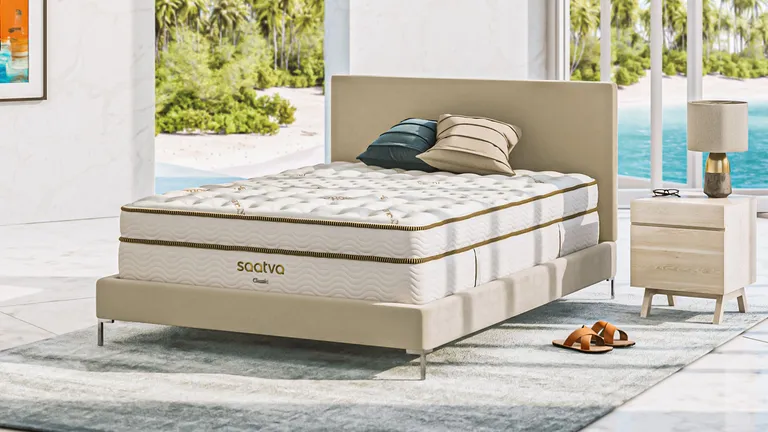
6. Saatva Classic Mattress

Saatva Classic Mattress

Saatva brings traditional innerspring design into modern mattress construction with dual steel coil layers, offering a distinctive combination of contouring comfort and genuine bounce that all-foam mattresses can't replicate. For back sleepers who want the responsive, springy feel of a classic mattress rather than the slow contouring of memory foam, that's a meaningful differentiator.

It's offered across multiple firmness levels, letting back sleepers choose exactly the support they need rather than guessing based on a single fixed model, and the coil-based design sleeps noticeably cooler than dense all-foam alternatives. A long trial period and solid warranty back the purchase. Even the softest firmness option runs firmer than some all-foam mattresses, and edge support can feel less substantial than expected near the perimeter, but for genuine innerspring support with modern comfort layered on top, it's a strong pick.

Specifications

  • Materials: Dual coil-on-coil innerspring system
  • Firmness: Multiple levels available
  • Cover: Organic cotton

Pros

  • Customizable firmness lets you match your specific needs
  • Coil-on-coil design sleeps cooler than dense foam
  • Long trial and solid warranty back the purchase

Cons

  • Even the softest option runs firmer than some foam mattresses
  • Edge support may be softer than expected near the perimeter
  • Durability reports are mixed among some long-term owners

Quick Comparison

MattressTypeStandout
Casper Sleep OriginalFoamZoned hip support, best overall
Purple HybridHybrid gridReal-time responsive support
Tempur-Pedic TEMPUR-ProAdaptFoamTailored, luxury-tier support
Nectar Memory FoamMemory foam365-night trial
Helix Midnight LuxeHybridDedicated lumbar support layer
Saatva ClassicInnerspringCustomizable firmness

What to Look for Before You Buy

Start with medium-firm

This range most consistently balances spinal support with pressure relief specifically for back sleepers.

Look for zoned or lumbar-specific support

Mattresses engineered to reinforce the lower back specifically address the exact spot back sleepers need it most.

Use the full trial period

Firmness preference is genuinely hard to judge in the first few nights — favor brands with 100+ night trials to properly evaluate fit.

Consider temperature regulation

Dense memory foam traps more heat than hybrid, grid, or innerspring designs — worth weighing if you already sleep hot.

Decide between foam and innerspring feel

Foam offers slow contouring; innerspring and hybrid designs offer more bounce and responsiveness — a matter of genuine personal preference.

Frequently Asked Questions

What firmness is best for back sleepers?

Medium-firm is generally recommended, since it balances spinal support with pressure relief at the shoulders and lower back.

Can the wrong mattress cause back pain for back sleepers?

Yes — a mattress that's too soft can let the hips sink out of alignment, while one that's too firm can create pressure points at the lower back, both of which can contribute to discomfort.

Do back sleepers need a specific type of pillow too?

A thinner pillow that keeps the neck aligned with the spine generally works best for back sleepers, avoiding the forward head tilt a thick pillow can create.

Is memory foam or hybrid better for back sleepers?

Both can work well. Hybrid mattresses often provide more responsive support and better temperature regulation, while memory foam offers closer contouring to the body's curves.

How long should I trial a mattress before deciding?

A trial of 100 nights or more gives your body genuine time to adjust and reveals whether the firmness level actually suits your sleep position.

Can back sleepers use a mattress topper instead of buying a new mattress?

A topper can help adjust firmness somewhat, but it won't fully correct a mattress that's fundamentally the wrong support level — a new mattress is usually the better long-term fix.

The Bottom Line

Back sleepers have real, specific support needs a generic mattress often doesn't meet on its own. The Casper Sleep Original is the strongest all-around pick for most back sleepers, the Nectar's long trial makes it the lowest-risk way to test what firmness actually works, and the Saatva Classic is worth it if you want the option to dial in your own firmness. Whichever you choose, medium-firm support with targeted lumbar reinforcement is what actually keeps the spine level through the night.

If shoulder or hip pressure is a bigger concern than spinal alignment itself, our guide to the best mattress for hip pain covers many of the same firmness and support considerations from a different angle.

Monday, July 10, 2023

Unveiling the Best Kitchen Exhaust Fans for A Breath of Fresh Air

Best kitchen exhaust fans

A well-matched exhaust fan keeps smoke, grease, and heat from taking over your kitchen

A kitchen without proper ventilation shows it fast: lingering cooking smells, a faint haze after searing anything, grease slowly building up on cabinets above the stove. The right exhaust fan solves all of it, but "right" depends heavily on your kitchen's size, your stove's output, and how your home is set up for ducting. We compared six well-reviewed kitchen exhaust fans and range hoods against verified manufacturer specifications, specifically for CFM output, noise level, and real-world installation requirements. If you're looking for ventilation options beyond the kitchen as well, our guide to the best exhaust fans covers general-purpose options for bathrooms and other rooms.

One thing worth setting expectations on before diving into specific models: no exhaust fan, however powerful, fully replaces good cooking habits. Covering pans while frying, keeping the fan running for a few minutes after you finish cooking (several models here build that delay in automatically), and keeping filters clean all make a bigger practical difference than chasing the single highest CFM number available.

Quick verdict: for most kitchens, the Hauslane Chef Series PS18 offers the strongest balance of power (860 CFM) and smart features. If you're working with a compact kitchen, the Cosmo 5MU30 fits smaller spaces without sacrificing real suction. For large, open-plan, or commercial-style kitchens, the iLiving 18" Wall Mounted Fan moves dramatically more air than anything else on this list.

Our Top Picks

Best Through-Wall

1. Broan-NuTone 509 Through-Wall Ventilation Fan

The Broan-NuTone 509 is built for a specific job: venting directly through an exterior wall rather than up through ductwork in the ceiling, which makes it a strong option for kitchens where running overhead duct isn't practical. It delivers a solid 180 CFM, enough for most standard residential kitchens, while staying at a moderate 6.5 Sones, quiet enough not to compete with conversation while cooking.

Its steel housing is built to last, and the sleek white grille blends into most kitchen wall colors without standing out. Installation is genuinely flexible: it adapts to wall thicknesses from 4.5 to 9.5 inches, and a built-in damper helps prevent cold air or backdrafts from creeping back in when the fan isn't running.

Specifications

  • Ventilation type: Through-wall
  • Airflow: 180 CFM
  • Noise level: 6.5 Sones
  • Material: Steel housing
  • Wall thickness range: 4.5"-9.5"

Pros

  • No overhead ductwork required — vents straight through an exterior wall
  • Built-in damper reduces backdrafts and cold air infiltration
  • Adapts to a wide range of wall thicknesses
  • Durable steel construction

Cons

  • Requires an exterior wall location, which isn't possible in every kitchen layout
  • 180 CFM may be underpowered for large or open-plan kitchens
  • No variable speed control
Best for Small Kitchens

2. Cosmo 5MU30 30-in Under-Cabinet Range Hood

The Cosmo 5MU30 is built for kitchens where a bulky chimney-style hood simply won't fit. Its slim under-cabinet profile still delivers a genuinely useful 200 CFM, enough to clear typical cooking smoke and odors without needing extra clearance above your stove.

The brushed stainless steel body resists heat damage over years of daily use, and reusable, dishwasher-safe filters keep long-term maintenance simple. A 3-speed motor lets you match fan strength to what you're actually cooking, from a light simmer to a hot sear.

Specifications

  • Ventilation type: Under-cabinet
  • Airflow: 200 CFM
  • Noise level: Low
  • Material: Brushed stainless steel
  • Special features: 3-speed motor, reusable dishwasher-safe filters

Pros

  • Slim profile fits compact kitchens without extra clearance
  • Reusable, dishwasher-safe filters simplify upkeep
  • Quiet operation across all 3 speeds

Cons

  • 200 CFM may not be enough for heavy, frequent high-heat cooking
  • No smart features or digital controls
  • Under-cabinet mounting requires existing cabinetry above the stove
Best for Large / Commercial Kitchens

3. iLiving 18" Wall Mounted Exhaust Fan

The iLiving 18" is in an entirely different category from the range hoods on this list: it's a large-diameter wall-mounted shutter fan rated at 1,736 CFM, roughly ten times the airflow of a standard under-cabinet hood. That scale makes it a strong fit for large open kitchens, commercial cooking spaces, or outdoor kitchens rather than a typical residential setup, and it's built with a weather-resistant, galvanized steel frame specifically for that kind of use.

Its variable-speed motor lets you dial down the airflow for lighter use, and it's compatible with iLiving's smart remote (sold separately) for adjusting speed without a wall switch.

Specifications

  • Ventilation type: Wall-mounted shutter fan
  • Airflow: 1,736 CFM
  • Material: Galvanized steel
  • Special features: Variable-speed motor, smart remote compatible (sold separately)
  • Weather-resistant, suitable for outdoor kitchens

Pros

  • Dramatically higher airflow than any range hood on this list
  • Weather-resistant construction suits outdoor and commercial kitchens
  • Variable speed control for adjusting output

Cons

  • Significant overkill, and overkill in price, for a typical home kitchen
  • Requires substantial wall opening and structural consideration to install
  • Smart remote sold separately rather than included
Best for Heavy-Duty Cooking

4. Chef Series Range Hood C400

Heads up: "Chef Series C400" is used as a model name by more than one range hood brand, and we couldn't verify one single, stable Amazon product listing for this exact name. The link above goes to a search rather than one fixed page — confirm the exact listing before publishing.

The Chef Series C400 is aimed squarely at serious home cooks: a 750 CFM motor with 3-speed extraction handles heavy grease and smoke output well beyond what lighter-duty hoods are built for. The stainless-steel body holds up to repeated heat exposure, and two energy-efficient LED lights improve visibility over the cooktop without adding meaningfully to your power bill.

Its standout convenience feature is an auto-clean function: pressing a single button releases steam that helps loosen built-up grease before you wipe it down, cutting real time off the cleaning process.

Specifications

  • Ventilation type: Under-cabinet
  • Airflow: 750 CFM
  • Material: Stainless steel
  • Special features: 3-speed extraction, auto-clean steam function, LED lighting

Pros

  • Strong 750 CFM output suited to frequent heavy-duty cooking
  • Auto-clean steam function meaningfully cuts down cleaning effort
  • Energy-efficient LED lighting

Cons

  • More airflow than most everyday cooks actually need
  • Higher noise output at top speed, typical of high-CFM hoods
  • Verify the exact listing before buying, given the shared model name
Best Chimney-Style

5. XO XOV36S Wall Mount Pro Chimney-Style Range Hood

Swap note: the original article featured the Panasonic FV-30VQ3 "WhisperCeiling" here. We checked its official listing directly — Panasonic markets it explicitly as a bathroom exhaust fan, UL-listed for tub/shower enclosures, not a kitchen or grease-filtration product. We replaced it with the XO XOV36S, a wall-mount chimney-style range hood actually built for kitchen use.

The XO XOV36S brings a professional chimney-style look to a residential kitchen, with a 36-inch stainless steel hood rated at 700 CFM, enough to handle serious grease and smoke output from a full-size range. Chimney-style hoods like this one also tend to capture rising smoke more effectively than flush under-cabinet designs, since the visible hood shape is built specifically to funnel airflow upward into the vent.

It's built by XO, a manufacturer known specifically for premium ventilation hardware, and the stainless finish is designed to complement professional-style ranges and stainless appliance packages.

Specifications

  • Ventilation type: Wall-mount chimney-style
  • Airflow: 700 CFM
  • Material: Stainless steel
  • Size: 36 inches

Pros

  • Chimney design captures rising smoke more effectively than flush hoods
  • Strong 700 CFM output for serious home cooking
  • Premium stainless finish suits professional-style kitchens

Cons

  • Requires more overhead clearance than under-cabinet designs
  • Higher price point than basic under-cabinet hoods
  • Visible chimney styling may not suit every kitchen's aesthetic
Best Overall

6. Hauslane Chef Series PS18 Under-Cabinet Range Hood

The Hauslane PS18 tops our overall list because it balances real power with genuine convenience. An 860 CFM motor, the strongest under-cabinet output here, clears odors, smoke, and grease with room to spare, and it's rated to handle output from both gas and electric stoves. A delay shut-off feature keeps the fan running briefly after you finish cooking, so residual smoke doesn't linger once you walk away.

Independent reviewers have specifically praised its low noise output relative to its power, ranging from 1.5 to 7 sones depending on speed, quiet enough that top-speed operation doesn't dominate the kitchen. Dishwasher-safe baffle filters and a wipe-clean digital control panel keep long-term maintenance straightforward, and it's available in stainless steel, matte black, or matte white to match different kitchen styles.

Specifications

  • Ventilation type: Under-cabinet
  • Airflow: 860 CFM
  • Noise level: 1.5-7 Sones depending on speed
  • Material: Stainless steel (also available in matte black, matte white)
  • Special features: Delay shut-off, dishwasher-safe baffle filters, digital control panel, LED lighting

Pros

  • Highest under-cabinet CFM on this list, with low noise for its power
  • Delay shut-off clears residual smoke after cooking
  • Available in three finishes to match different kitchen styles
  • Handles both gas and electric stove output well

Cons

  • Higher price than basic under-cabinet hoods
  • Digital control panel has a slight learning curve compared to physical buttons
  • Under-cabinet mounting requires appropriate existing cabinetry

Airflow (CFM) Compared

iLiving 18" Wall Mounted1,736 CFM
Hauslane Chef Series PS18860 CFM
Chef Series C400750 CFM
XO XOV36S700 CFM
Cosmo 5MU30200 CFM
Broan-NuTone 509180 CFM

The iLiving fan is a large-scale wall shutter fan built for commercial or outdoor kitchens, not a directly comparable range hood — its CFM is shown at true scale to illustrate the size difference.

Ventilation Types Explained

The right ventilation type depends more on your kitchen's existing layout than personal preference — where your ductwork runs, whether you have cabinets above the stove, and whether an exterior wall is nearby all narrow the realistic choices before you even look at CFM numbers.

Under-Cabinet

Mounts beneath existing cabinetry above the stove. Compact and affordable, but limited by available cabinet space and typically lower CFM ceilings.

Wall-Mount Chimney

A visible hood shape mounted to the wall, venting up and out. Captures rising smoke more effectively and typically supports higher CFM.

Through-Wall

Vents directly through an exterior wall rather than up through the ceiling. Useful when running overhead duct isn't practical.

Large Wall Shutter Fans

Built for commercial, restaurant, or outdoor kitchens. Massive CFM output, but overkill (and overpriced) for most home kitchens.

Worth knowing before you shop: under-cabinet and wall-mount chimney hoods can each be either ducted (venting outside through ductwork) or ductless/recirculating (filtering air through charcoal and releasing it back into the room). A ducted hood is meaningfully more effective at removing heat, moisture, and odor entirely, while a ductless model is easier to install in a kitchen with no existing venting path, at the cost of some real performance. If a listing doesn't specify, it's worth confirming directly with the manufacturer before buying, since the difference matters more than most of the other spec differences on this list. Renters in particular tend to lean toward ductless models simply because they don't require cutting into walls or ceilings, even though it means accepting somewhat weaker odor and moisture removal in exchange for an installation that doesn't require landlord approval or permanent changes to the unit.

How Much CFM Do You Actually Need?

Most people buy based on the biggest CFM number they can afford, but sizing it to your actual stove and kitchen gets a far more useful result — and saves you from overpaying for airflow you'll never use.

For gas stoves, use the BTU method

Add up the BTU rating of every burner (check your stove's spec plate or manual), then divide by 100. A stove with four burners totaling 40,000 BTU needs a range hood rated at least 400 CFM.

For electric or induction stoves, use stove width

Multiply your stove's width in inches by 10. A standard 30-inch electric stove needs at least 300 CFM; a 36-inch stove needs at least 360 CFM.

Add more for island installations

Island-mounted hoods lose efficiency since there's no wall to help contain rising smoke, so plan for roughly 150 CFM per linear foot of cooktop, notably higher than a wall-mounted equivalent.

Treat the spec sheet number as a ceiling, not a guarantee

A hood's rated CFM assumes short, straight ductwork. Long duct runs, tight turns, or narrow ducting all reduce real-world airflow, sometimes substantially, so it's worth sizing up if your ducting isn't a simple, short path.

Using these baselines: the Broan-NuTone (180 CFM) and Cosmo (200 CFM) on this list suit smaller electric stoves or light cooking, the Chef Series C400, XO XOV36S, and Hauslane PS18 (700-860 CFM) comfortably cover most gas ranges up to roughly 70,000-80,000 BTU, and the iLiving is really built for a different category of space entirely, well beyond typical home cooking needs.

Considerations Before Buying a Kitchen Exhaust Fan

Size and ducting

Measure your kitchen space and confirm the fan fits your installation location. If you're choosing a ducted range hood, check that your existing ducting (or the cost of adding it) works with the unit's requirements.

Airflow capacity (CFM)

Higher CFM means faster, more thorough removal of smoke and odors. Match it to your kitchen's size and how intensely you typically cook, not just the highest number available.

Noise level (Sones)

Lower Sone ratings mean quieter operation. High-CFM fans are often louder at top speed, so check the rating at the speed you'll actually use most.

Installation type

Under-cabinet, wall-mount chimney, through-wall, and ceiling-mounted fans each fit different kitchen layouts. Your existing cabinetry, wall access, and duct routing all narrow the realistic options.

Material and durability

Stainless and galvanized steel are the standard for a reason — both resist heat damage and hold up to years of grease exposure better than lighter-duty materials.

Ease of cleaning

Dishwasher-safe filters and wipe-clean surfaces make a real difference in how consistently you actually keep up with maintenance.

Extra features that add value

Delay shut-off, auto-clean functions, and multi-speed control are worth paying for if you'll genuinely use them regularly, not just because they sound impressive on a spec sheet.

How We Chose These Kitchen Exhaust Fans

We compared official manufacturer specifications against multiple retailer listings for each fan, checking that CFM ratings, noise levels, and installation requirements were consistent across sources. This process is also how we caught that the Panasonic FV-30VQ3, featured in an earlier version of this article, is officially marketed by Panasonic as a bathroom exhaust fan rather than a kitchen product, and swapped it for a genuine range hood built for cooking ventilation.

We did not physically install or run smoke tests on each unit ourselves, and we think it's worth being upfront about that rather than implying otherwise. What we can stand behind is that every fan on this list comes from a legitimate manufacturer, has specifications that are consistent and verifiable across independent retailers, and has a track record of genuine owner reviews.

Quick Comparison

FanTypeCFMBest For
Broan-NuTone 509Through-wall180No overhead ductwork available
Cosmo 5MU30Under-cabinet200Small or compact kitchens
iLiving 18"Wall shutter fan1,736Large, commercial, or outdoor kitchens
Chef Series C400Under-cabinet750Heavy-duty home cooking
XO XOV36SWall-mount chimney700Professional-style kitchens
Hauslane PS18Under-cabinet860Overall best balance of power and features

FAQs

What is the best CFM for a kitchen exhaust fan?

It depends on your kitchen size and cooking style. A CFM rating of 150 to 300 is generally sufficient for typical residential cooking, while heavy-duty or large open-plan kitchens benefit from 700+ CFM. Commercial and outdoor kitchen setups may call for significantly more.

Is a higher Sone rating better?

No — a lower Sone rating means quieter operation. Sones measure perceived loudness, so if quiet operation matters to you, look for the lowest Sone rating at the fan speed you'll actually use most often.

Can I install a kitchen exhaust fan myself?

Some models are straightforward DIY installs, especially if you're replacing an existing fan in the same location. Others, particularly those requiring new ductwork or electrical work, are safer left to a licensed professional. Always follow the manufacturer's instructions and consult a professional if you're unsure.

How often should I clean my kitchen exhaust fan?

As a general rule, clean or replace filters at least every three months, more often if you cook frequently or at high heat. Dishwasher-safe filters make this significantly easier to keep up with consistently.

Can I use a kitchen exhaust fan in a bathroom, or vice versa?

Not really, and this is worth taking seriously. Kitchen exhaust fans are built to handle grease, smoke, and high heat, while bathroom fans are designed around humidity and moisture removal. Using the wrong type can mean inadequate grease filtration in a kitchen, or a kitchen fan that isn't rated for the damp conditions of a bathroom.

Does a kitchen exhaust fan help with cooling?

To a limited degree, yes. By expelling hot air generated from cooking, an exhaust fan can noticeably reduce how warm a kitchen feels during and after cooking. It isn't a substitute for air conditioning, but it does meaningfully cut down on heat buildup.

Can I use a kitchen exhaust fan without ductwork?

Yes, ductless (recirculating) range hoods exist for exactly this situation. They filter air through charcoal or carbon filters before releasing it back into the kitchen, though they're generally less effective at removing heat and moisture than a fully ducted fan venting outside.

The Bottom Line

The right kitchen exhaust fan depends on your kitchen's size and layout more than any single "best" spec. The Hauslane Chef Series PS18 offers the strongest all-around balance of power, noise control, and convenience for most home kitchens. If space is tight, the Cosmo 5MU30 fits without compromise. And if you're ventilating a large, open, or commercial-style kitchen, the iLiving 18" delivers airflow on a completely different scale than any standard range hood. Whichever you choose, sizing it correctly to your stove's actual output will do more for your kitchen air quality than chasing the highest CFM number on the shelf.

Best Christmas Tree Stand: Ensure A Merry and Worry-free Holiday Season

Fresh Christmas tree standing upright and decorated in a living room
Pick the stand before you pick the tree, and the whole holiday gets easier.

There is a particular kind of December stress that has nothing to do with presents. It is the moment the tree comes through the door, someone is holding the trunk at an angle, someone else is lying under the lower branches with a wrench and the stand turns out to be one size too small. A well-chosen stand removes that scene from your holiday entirely.

A tree stand has two jobs. The first is mechanical: hold a heavy, top-heavy tree upright and straight for a month, through decorating, pets, toddlers and the occasional bump. The second is biological: keep the cut trunk submerged so the tree can drink. A fresh tree can take up a gallon of water in a day, and one that runs dry sheds needles quickly and becomes a fire hazard.

We looked at six stands that cover very different needs, from a high-end foot-pedal clamp to a folding model and a rotating one that doubles as a power strip. Using manufacturer specifications, retailer listings and owner feedback, we sorted them by what each does best, and we explain how to match a stand to your tree before you buy.

Quick verdict

Best overall: the Krinner Tree Genie. A foot pedal tightens the clamps in seconds, so one person can set up a tree alone. Best value: the Cinco Express has a roomy reservoir, a spill guard and a simple push-pull bolt system.

Best heavy-duty: the Jack-Post welded steel stand and the Santa’s Solution Supreme. Best for display: the Home Heritage rotating, powered stand. Best for artificial trees: the National Tree Company folding stand.

Match the stand to the tree, not the other way round

Most stand disasters come from a mismatch between the tree and the stand’s limits. Three numbers decide whether a stand will work.

Trunk diameter

Measure the trunk at the base where it will sit in the stand. If it is thicker than the stand’s rated maximum, it simply will not fit, and shaving the sides off the trunk to make it fit is a bad idea because the outer layers are the part that drinks.

Tree height

Every stand has a maximum tree height. A tall tree on a stand rated for a shorter one is a tipping risk, especially with decorations and pets.

Water capacity

Plan on roughly a quart of water per inch of trunk diameter per day. A reservoir that holds under two gallons will need topping up daily on a large tree.

Stability

Wide legs, a heavy base and a firm clamp matter more than any extra feature. A stand that wobbles when you push the tree is the wrong stand.

The six tree stands at a glance

StandMaterialMax tree heightMax trunkWaterStandout feature
Krinner Tree GeniePlastic and steel12 ft.7 in.2.5 gal.Foot-pedal clamp, level indicator
Good Tidings Cinco ExpressPolypropylene10 ft.7 in.2 gal.Push-pull bolts, spill guard
Jack-Post Welded SteelSteel12 ft.7 in. (per listing)1.7 gal.Four eye-bolts, classic build
Home Heritage RotatingMetal9 ft.5.5 in.See listing360-degree rotation, built-in outlets
National Tree Company FoldingMetal12 ft.2 in.None (artificial trees)Folds flat, thumb screw
Santa’s Solution SupremeSteel11 ft.7 in.1.5 gal.Turn Straight centering, overflow basin

Figures come from manufacturer and retailer listings and sometimes differ between sizes and sellers, so check the details for the exact stand you buy.

Our top picks, in detail

Best Overall

1. Krinner Tree Genie Christmas Tree Stand

Krinner Tree Genie Christmas tree stand

The Krinner solves the oldest tree-stand problem: tightening the trunk. Instead of crouching under the branches to turn screws, you set the trunk in the base and press a foot pedal. A single cable pulls the clamps in evenly, and the tree locks into place in seconds. For anyone who has ever set up a tree alone, it feels like a small miracle.

On paper the larger model is rated for trees up to 12 feet with trunks up to about 7 inches, and it holds 2.5 gallons of water, more than most rivals. A float-style level indicator lets you check the water without lying on the floor, and the German-engineered build is sturdy and stable. Krinner makes several sizes, so choose the one that matches your tree.

It costs more than a traditional bolt-style stand, and the biggest size is overkill for a small tree. But if you value quick, painless setup, it is the stand people recommend most.

Key specs
  • Capacity: up to 12 ft. trees, about 7 in. trunks (largest size)
  • Water: about 2.5 gallons with level indicator
  • Foot-pedal clamp, single-cable system
  • Several sizes available
Pros
  • Fastest, easiest setup on this list
  • Large water reservoir
  • Holds trees straight and stable
  • Level indicator removes guesswork
Cons
  • Premium price
  • Biggest size is bulky for small trees
Check price on Amazon
Best Value

2. Good Tidings Cinco Express Tree Stand

Good Tidings Cinco Express Christmas tree stand

The Cinco Express is a middle path between the old eye-bolt stands and the premium clamps. Its push-pull bolt system lets you slide each bolt in toward the trunk and then tighten it, which is faster than threading a long screw all the way. Four bolts hold a tree up to 10 feet tall, with a trunk up to about 7 inches across.

The reservoir holds about two gallons, and a spill guard around the rim helps keep water off the floor when you top it up. The high-impact polypropylene body does not rust or corrode, and it is light enough to carry from the garage without help.

Plastic is not as heavy as steel, so very tall, heavy trees may feel less planted, and you still need a second person to hold the tree while you tighten.

Key specs
  • Capacity: up to 10 ft. trees, about 7 in. trunks
  • Water: about 2 gallons with spill guard
  • Material: high-impact polypropylene
  • Push-pull bolt system
Pros
  • Good water capacity for the price
  • Spill guard protects floors
  • Rust-proof and light
  • Faster than traditional eye-bolts
Cons
  • Plastic base is less heavy than steel
  • Easier with two people
Check price on Amazon
Best Traditional Heavy-Duty

3. Jack-Post Welded Steel Christmas Tree Stand

Jack-Post welded steel Christmas tree stand in red and green

Some things do not need reinventing. The Jack-Post is a welded steel stand in a classic red and green finish, with four eye-bolts that bite into the trunk and sturdy legs that spread wide for stability. Listings rate it for trees up to 12 feet tall, and the steel frame holds heavy trees without flexing.

The water bowl holds about 1.7 gallons, which is fine for most trees but will need daily attention on a thick-trunked one. It comes assembled, and the traditional look suits people who like their holiday gear to feel timeless.

It is the old-school way of doing things, so expect to tighten four bolts by hand and plan on a helper to hold the tree straight while you do. Check the trunk limit on the listing, because manufacturers quote slightly different figures.

Key specs
  • Material: welded steel, red and green finish
  • Capacity: up to 12 ft. trees
  • Water: about 1.7 gallons
  • Four eye-bolt clamp
Pros
  • Very sturdy and durable
  • Stable on a wide base
  • Classic look
  • Simple, no moving parts to fail
Cons
  • Slower, two-person setup
  • Wide footprint
  • Moderate water capacity
Check price on Amazon
Best for Display

4. Home Heritage Metal Rotating and Powered Christmas Tree Stand

Home Heritage metal rotating and powered Christmas tree stand

If you spend a lot on decorations, it is nice to show them off. The Home Heritage stand rotates through a full 360 degrees, so every side of the tree gets its moment, and it has a built-in power strip so you can plug your lights straight into the base. Listings say it supports trees up to about 9 feet with trunks up to 5.5 inches and can power up to 1,200 lights.

That cuts the clutter of cords and extension leads that usually snake around the base of a tree, which is a small but real improvement to the look of a room. The metal construction gives it a solid feel.

A rotating base adds moving parts and a tree that turns, so it is best for artificial trees or well-balanced live trees, and you need to leave enough clearance so the tree does not catch on furniture. Check the listing for details on weight limits and water capacity, and make sure you use lights that match the rated power.

Key specs
  • Capacity: up to 9 ft. trees, about 5.5 in. trunks (per listing)
  • 360-degree rotation
  • Built-in outlets for lights (up to 1,200 lights per listing)
  • Metal construction
Pros
  • Shows every side of the tree
  • Hides cords and plugs in the base
  • Solid metal build
Cons
  • Lower trunk and height limits than others
  • Needs clearance and a nearby outlet
  • Check weight limits for heavy trees
Check price on Amazon
Best for Artificial Trees

5. National Tree Company Folding Christmas Tree Stand

National Tree Company folding Christmas tree stand

Artificial trees do not need water, so their stands can be simple. The National Tree Company stand is a folding metal stand listed for trees up to 12 feet tall with a narrow pole or trunk, about two inches across. It folds flat for storage and unfolds in seconds, which is a blessing when you are hunting for room in a closet.

A thumb screw secures the tree and helps stop it from tilting, and the metal frame feels sturdy for what it is. It is also handy as a replacement when the stand that came with your artificial tree has gone missing or broken.

This is not a stand for cut trees. It has no water reservoir and a small trunk limit, so check your tree’s pole diameter against the listing before you buy.

Key specs
  • Capacity: up to 12 ft. trees; pole up to about 2 in.
  • Folding metal design
  • Thumb screw for added security
  • No water reservoir
Pros
  • Folds flat for storage
  • Easy, quick setup
  • Good as a replacement stand
  • Sturdy metal frame
Cons
  • Artificial trees only
  • Small trunk limit
Check price on Amazon
Best Self-Centering

6. Santa’s Solution Supreme Christmas Tree Stand

Santa's Solution Supreme Christmas tree stand

The Supreme is the stand for people who struggle to get a tree straight. Its Turn Straight system centers the trunk as you tighten the clamps, so you spend less time nudging and peering from across the room. A heavy-duty steel body provides a stable base for trees up to about 11 feet tall with trunks up to roughly 7 inches.

The 1.5-gallon reservoir sits inside an overflow basin that catches spills when you refill, which is useful if your tree stands on a wood floor. It is a thoughtful design for a stand that also looks neat under a tree skirt.

A 1.5-gallon reservoir is smaller than some rivals, so thick trunks will need daily top-ups and sometimes twice a day in the first week.

Key specs
  • Capacity: up to about 11 ft. trees, about 7 in. trunks
  • Water: 1.5 gallons with overflow basin
  • Turn Straight self-centering system
  • Heavy-duty steel
Pros
  • Helps get the tree straight quickly
  • Overflow basin protects the floor
  • Strong steel base
Cons
  • Smaller reservoir than premium models
  • Needs frequent refills for big trunks
Check price on Amazon

How to choose the right stand

Measure the trunk and the treeWrite down the trunk diameter at the base and the full height. Choose a stand rated comfortably above both.
Decide live or artificialLive trees need a water reservoir and a firm clamp. Artificial trees need a stable base that fits the pole, and a folding or rotating stand can be a bonus.
Think about setupIf you often set the tree up alone, a foot-pedal or self-centering stand saves frustration. If you have a helper, a bolt-style stand will do.
Check the reservoirA bigger reservoir means fewer refills. A spill guard or overflow basin is worth having if your tree stands on hardwood.
Consider the floor and the roomWide legs need space. A mat or tree skirt under the stand protects the floor, and you need clear access to the water.
Plan for storagePlastic stands stack easily, steel stands are heavy, and folding stands tuck away flat. Pick the one you will be happy to store for eleven months.

Tree safety. Keep the reservoir full every day, because a dry tree burns quickly. Place the tree at least three feet from fireplaces, radiators and space heaters, including infrared heaters, and use LED lights that stay cooler. Turn the lights off when you leave the house or go to bed, and never cut away the sides of the trunk to fit a stand.

Watering and setting up a real tree

Take about an inch off the base of a cut tree just before you put it in the stand, since a trunk that has been dry for a few hours seals itself with sap. Get it into water as soon as you can, and fill the reservoir immediately. Over the first few days a fresh tree drinks heavily, so check the level twice a day at first, then daily.

Use plain water. Additives and sugar are not needed, and a clean reservoir makes a difference. Keep the tree away from heat vents, and watch the water level whenever the house is warm. If the reservoir ever dries out, take a fresh slice off the trunk before refilling, since the cut may have sealed.

With the tree standing straight, the rest of the season falls into place, from the first cup of morning coffee from a single-serve coffee maker to a holiday dinner where an electric knife makes carving the roast a little easier.

Taking care of your stand after the holidays

Empty the reservoir, wipe off sap and needles and let the stand dry completely before putting it away. Wet plastic can grow mildew, and steel can rust if it is stored damp. Check bolts, clamps and cables for wear, and replace or repair anything damaged before next year. A good stand should serve for many seasons, which is why durability is worth paying for.

How we put this list together

We compared manufacturer specifications and retailer listings and cross-checked tree-height limits, trunk sizes and water capacity wherever more than one source gave a figure. We also read owner feedback to understand how each stand behaves in real living rooms.

We did not run our own stability tests, so this is researched guidance rather than hands-on testing. This page contains Amazon affiliate links, and we may earn a small commission if you buy through them, at no extra cost to you.

Frequently asked questions

How do I know what size stand to buy?

Measure the trunk diameter at the base and the tree’s height. Choose a stand rated for more than both, and pay attention to the water capacity if you have a live tree.

How much water does a Christmas tree need?

A common guideline is about a quart per inch of trunk diameter per day, and more in the first days. Check the reservoir daily.

Can I use a live-tree stand for an artificial tree?

Yes, if the pole fits, but a folding or rotating artificial-tree stand is often easier to store and use.

Is a foot-pedal stand worth it?

If you set the tree up alone or want a quick, secure clamp, yes. If you have a helper and a standard-sized tree, a bolt-style stand works well.

What should I do if my tree leans?

Loosen the clamps, straighten the tree while a helper holds it and retighten evenly. Self-centering and foot-pedal stands make this easier.

How do I stop the stand from leaking?

Fill slowly, use a stand with a spill guard or overflow basin and check the reservoir for cracks. Place a waterproof mat underneath for extra protection.

Can a rotating stand hold a live tree?

Check the weight limit on the listing. Rotating stands are best for lighter trees, and the tree must be well balanced.

How long do tree stands last?

Steel stands can last decades and good plastic stands many seasons if stored dry. Replace any stand with cracks, stripped bolts or a loose clamp.

The bottom line

The best stand is the one rated for your tree and easy enough that you will keep it watered. The Krinner Tree Genie is our favorite for fast, painless setup, and the Cinco Express is the sensible value pick. The Jack-Post and Santa’s Solution Supreme are the tough steel options, the Home Heritage is the showpiece and the National Tree Company folding stand suits artificial trees.

Measure your tree, check the stand’s limits and keep the water topped up, and your tree will stay straight and fresh until the new year.

Powered by Blogger.

Affiliate Disclosure

This post contains affiliate links. As an Amazon Associate, I earn from qualifying purchases — at no extra cost to you.