


Chronic joint and muscle pain make every mattress detail matter more than usual.
Arthritis and fibromyalgia both turn an ordinary night's sleep into something that has to be actively managed, not just hoped for. Arthritis brings joint inflammation and stiffness that a too-firm surface can aggravate, while fibromyalgia's widespread tenderness means even light pressure in the wrong spot can disrupt sleep. A mattress that gets both firmness and pressure relief right can make a genuine difference in how you feel the next morning. We compared six well-reviewed mattresses on real, checkable details — pressure relief technology, cooling performance, and genuine standout features — rather than repeating the marketing language every mattress brand uses.
Quick verdict: for most people managing arthritis or fibromyalgia, the Tempur-Pedic TEMPUR-Adapt offers the strongest combination of personalized contouring and genuine support. If you run hot at night, the Purple Mattress's airflow-promoting grid stands out. For the longest window to test fit, the Nectar Gel Memory Foam's generous trial and warranty are hard to beat.
Why These Two Conditions Need Different Things From a Mattress
Arthritis and fibromyalgia affect the body differently, and that distinction matters when choosing a mattress. Arthritis causes localized joint inflammation, so support at specific points — hips, knees, shoulders — matters most, and a mattress that's too firm can concentrate pressure directly on already-inflamed joints. Fibromyalgia causes more widespread tenderness across muscles and soft tissue, so even distribution of body weight across the entire mattress surface matters more than targeting any single point. In practice, this means both conditions tend to respond well to the same general category — medium-firm memory foam or hybrid mattresses that combine contouring with real support — but for slightly different reasons.
Memory Foam
Contours closely to relieve pressure at inflamed joints and tender points alike. Look for gel infusion to offset the heat retention plain memory foam is known for.
Hybrid
Combines coil support with a foam comfort layer, often the best balance for arthritis specifically, since the coils prevent joints from sinking too deep.
Responsive Grid
Flexes instantly under pressure rather than slowly conforming, distributing weight evenly — a genuine advantage for fibromyalgia's widespread tenderness.
Our Top Picks
Best Overall1. Tempur-Pedic TEMPUR-Adapt
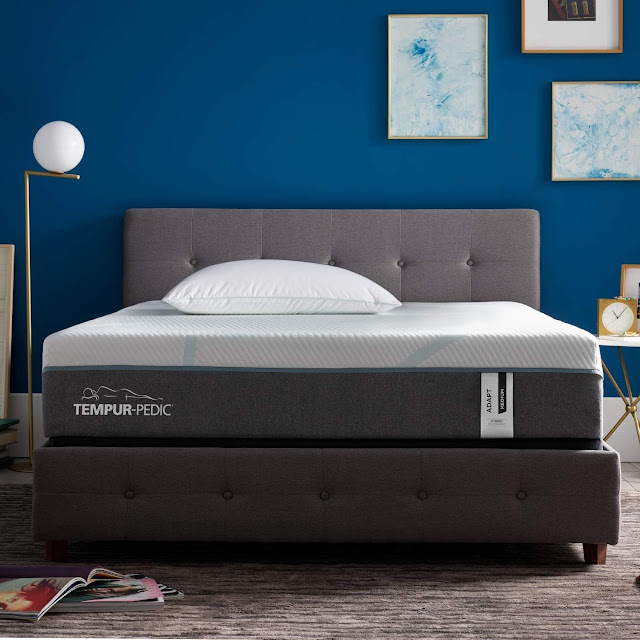
Tempur-Pedic's proprietary TEMPUR material adapts individually to your body, which is exactly what both arthritis and fibromyalgia sufferers need — personalized comfort rather than a generic firmness level. A layer of Tempur-ES material adds extra cushioning specifically appreciated by arthritis sufferers, while the hybrid construction blends that foam with over 1,000 premium spring coils to evenly distribute body weight and reduce pressure on aching joints.
A cool-to-touch cover helps maintain a comfortable sleep temperature, which matters since fibromyalgia sufferers are often sensitive to overheating. It's a premium price point and can feel firm to some, with a possible slight off-gassing smell initially, but the combination of personalized contouring and genuine joint support makes it the safest overall recommendation.
Specifications
- Materials: Proprietary TEMPUR material, Tempur-ES cushioning layer, individually wrapped coils
- Cover: Cool-to-touch
- Firmness: Medium
- Warranty: 10 years
Pros
- TEMPUR material offers personalized comfort and pressure relief
- Hybrid design balances support and comfort
- Cool-to-touch cover maintains optimal sleep temperature
Cons
- Higher price point may not suit all budgets
- Some users may find it too firm
- Slight off-gassing smell initially
2. Purple Mattress

Purple's innovative grid flexes under pressure rather than conforming slowly, distributing weight and contouring to your body shape in a way that addresses pressure points precisely — a genuine advantage for fibromyalgia's widespread tenderness, where a single firm spot can disrupt an entire night's sleep. The grid design also promotes airflow, keeping hot sleepers noticeably cooler than dense memory foam.
Built from a blend of foam and hyper-elastic polymer, it balances support and flexibility in a way that can genuinely help both arthritis and fibromyalgia patients — alleviating joint pressure for one, easing painful pressure points for the other. Motion isolation is excellent, which matters for anyone sharing a bed. The unique grid feel isn't for everyone, and it may lack the traditional support feel some sleepers prefer.
Specifications
- Materials: Hyper-elastic polymer grid over high-density polyurethane foam
- Extras: Grid flexes under pressure, promotes airflow
- Firmness: Medium-firm
- Warranty: 10 years
Pros
- Hyper-elastic polymer grid provides excellent pressure relief
- Grid design promotes airflow for cooler sleep
- Great motion isolation, beneficial for couples
Cons
- The unique grid feel might not appeal to everyone
- May lack the traditional support feel some sleepers prefer
- Some users report it feels too firm
3. Nectar Gel Memory Foam Mattress
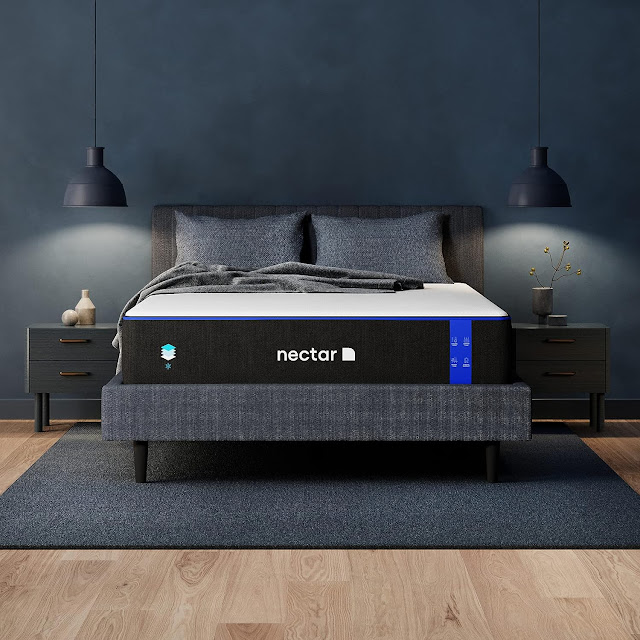
Nectar's five-layer construction gives each layer a specific job: a dense foam base for stable alignment, an adaptive response transition layer for gentle bounce, a gel memory foam layer that provides precise contouring for fibromyalgia's tender points, and a quilted memory foam layer for extra comfort on top. The stable base is especially useful for arthritis sufferers, who need consistent alignment more than deep sinking.
A Tencel cooling cover wicks away heat, and Nectar backs the mattress with a generous sleep trial and warranty — genuinely valuable when you're managing a chronic condition and need real time to know if a mattress is actually working. It may run firm for some, especially side sleepers, and edge support is a minor weak point, but the trial period alone reduces the risk of a bad purchase.
Specifications
- Materials: Five-layer construction including dense foam base, adaptive response layer, gel memory foam, quilted memory foam
- Cover: Tencel cooling
- Extras: Generous sleep trial and warranty
Pros
- Five-layer construction provides both support and comfort
- Gel memory foam aids in cooling and pressure relief
- Comes with a generous sleep trial and warranty
Cons
- May be too firm for some, especially side sleepers
- Minimal edge support can be a concern
- Initial off-gassing might be noticeable
4. Sealy Posturepedic Hybrid Performance Kelburn
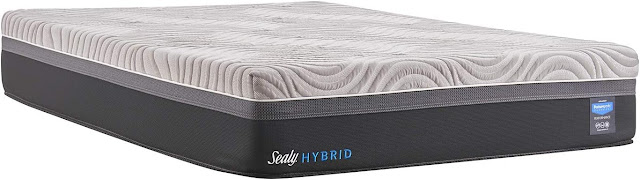
Sealy's Posturepedic technology targets reinforced support specifically at the heavier parts of the body, which translates into a real win for arthritis sufferers whose joints need consistent, non-sinking support night after night. The hybrid design combines a durable coil system with a comfort foam layer that gently conforms to the body without losing structural support.
Gel-infused memory foam adds pressure-point relief that fibromyalgia patients benefit from directly, and Sealy's Chill Technology keeps the sleep surface cool for restful, uninterrupted sleep. It's on the pricier side and can feel firm to some, and heavyweight sleepers might find it slightly less supportive than the foam-heavier options on this list, but the targeted support is a genuine strength for joint pain specifically.
Specifications
- Materials: Gel-infused memory foam comfort layer, encased coil support core
- Extras: Posturepedic Technology, Chill Technology cooling
- Type: Hybrid
Pros
- Hybrid construction offers a good balance of comfort and support
- Posturepedic Technology provides targeted, reinforced support
- Chill Technology incorporates cooling for more comfortable sleep
Cons
- May be on the pricier side for some consumers
- Some users may find it too firm
- Heavyweight sleepers might not find it supportive enough
5. Casper Original Foam Mattress

Casper's "Zoned Support" design offers targeted relief across three distinct zones — firmer support for the hips, waist, and back, softer comfort for the shoulders, and proper spinal alignment throughout. That kind of differentiated firmness is a genuinely useful approach for arthritis, since joint pain rarely presents uniformly across the whole body.
A breathable foam layer aids heat dissipation for a cooler sleeping environment, and the contouring memory foam layer helps relieve the kind of pressure that fibromyalgia sufferers deal with directly. It's an all-foam construction, which offers strong motion isolation but lacks the bounce some sleepers prefer, and edge support could be firmer for some users. Still, the zoned approach makes it a smart pick for anyone whose pain concentrates in specific areas.
Specifications
- Materials: Three-layer all-foam design with base support foam, Zoned Support transition layer, breathable open-cell foam
- Cover: Stretchy, breathable fabric
- Extras: Three-zone targeted support
Pros
- Zoned Support offers targeted relief and promotes spinal alignment
- Breathable foam top layer helps regulate temperature
- All-foam construction offers good motion isolation
Cons
- May lack the bounce some sleepers prefer
- Edge support might not be strong enough for some users
- Some people might find it too soft for adequate support
6. Sleep Innovations Marley Cooling Gel Memory Foam Mattress

Rounding out this list, the Sleep Innovations Marley leans into a three-layer design purpose-built around cooling — a top layer of cooling gel memory foam, a middle air-channel layer for breathability, and a firm, supportive foam base that maintains proper spinal alignment, which matters directly for arthritis sufferers.
The top layers provide the contouring comfort fibromyalgia patients benefit from, while the base handles the structural support arthritis needs. Its heat dissipation is a genuine standout, particularly for anyone whose pain flares in a warm bed. Edge support could be better, and hot sleepers with especially high heat sensitivity may still want more cooling than it offers, but the balanced comfort-to-support ratio makes it a solid, accessible pick.
Specifications
- Materials: Three-layer design with supportive foam base, air channel foam, cooling gel memory foam top layer
- Cover: Quilted, cooling poly-blend
- Extras: Heat dissipation focus
Pros
- Cooling gel memory foam maintains comfortable sleep temperature
- Offers a balanced feel of comfort and support
- Three-layer design aids pressure relief and body contouring
Cons
- Some sleepers may find it too firm
- Edge support could be better
- Cooling effect might not be sufficient for hot sleepers
Quick Comparison
| Mattress | Type | Standout |
|---|---|---|
| Tempur-Pedic TEMPUR-Adapt | Hybrid | Personalized contouring plus coil support |
| Purple Mattress | Grid hybrid | Airflow, even weight distribution |
| Nectar Gel Memory Foam | Memory foam | Generous trial and warranty |
| Sealy Posturepedic Kelburn | Hybrid | Targeted joint support |
| Casper Original Foam | Foam | Three-zone targeted relief |
| Sleep Innovations Marley | Memory foam | Strong heat dissipation |
What to Consider Before You Buy
Match firmness to your specific condition
Medium-firm generally works well for both, though arthritis sufferers may lean toward more targeted support while fibromyalgia sufferers often prioritize even pressure distribution.
Look for genuine pressure relief technology
Zoned support, responsive grids, or multi-layer foam systems all address pressure points more precisely than a single slab of uniform foam.
Consider temperature regulation
Many fibromyalgia sufferers report heightened temperature sensitivity — cooling covers, gel infusion, or airflow-focused designs are worth prioritizing.
Use the full trial period
Chronic pain conditions make firmness preference genuinely hard to judge in the first few nights — favor brands with 100+ night trials.
Factor in material quality and durability
A mattress that sags prematurely undermines the exact support you're relying on it for — durable, well-reviewed materials matter more here than in a typical mattress purchase.
Frequently Asked Questions
Can a mattress help with arthritis and fibromyalgia pain?
Yes, a suitable mattress can help by providing targeted support and pressure relief, which can reduce pain and improve sleep quality. It's not a cure, and should be paired with medical guidance.
What firmness level is best for arthritis and fibromyalgia?
Medium-firm is generally recommended, since it balances comfort and support. The ideal level should align with your sleep position and personal preference.
Should I look for a hybrid or all-foam mattress?
Both can work well. Hybrid mattresses often provide more targeted joint support thanks to their coil systems, while all-foam mattresses tend to offer more even pressure distribution, which can benefit fibromyalgia's widespread tenderness.
Why does temperature regulation matter for these conditions?
Some people with fibromyalgia are especially sensitive to temperature. A mattress with cooling technology can help regulate body heat and promote a more comfortable sleep environment.
How long should I trial a new mattress before deciding?
A longer trial period, generally 100 nights or more, gives your body genuine time to adjust and reveals whether a mattress actually helps with your specific pain pattern.
Should I consult a doctor before choosing a new mattress?
It's a good idea. A healthcare provider familiar with your specific arthritis or fibromyalgia presentation can offer recommendations tailored to your individual needs alongside your mattress choice.
Arthritis and fibromyalgia both call for a mattress that gets pressure relief right, even if the underlying reasons differ slightly. The Tempur-Pedic TEMPUR-Adapt is the strongest all-around pick for personalized comfort, the Purple Mattress is worth prioritizing if you run hot or want even weight distribution, and the Nectar's long trial period makes it the lowest-risk way to find out what actually helps your body. Whichever you choose, treat it as one part of a broader care plan built with your doctor — not a standalone fix.
If joint pain concentrates specifically around the hips, our guide to the best mattress for hip pain covers many of the same support and pressure-relief considerations in more focused detail.


.png)
No comments:
Post a Comment