


A clean cut heals fast — a crushed one invites disease. The blades you use matter more than most gardeners realize.
Anyone who's pruned with a dull, mismatched pair of shears knows the feeling: you squeeze, the branch bends and tears rather than parting cleanly, and you're left wondering whether you just hurt the plant more than you helped it. Pruning shears look like a simple tool, but the difference between a good pair and a cheap one shows up every single time you make a cut — in how much force it takes, how clean the wound heals, and how long the blade stays sharp before it needs attention. We compared six well-reviewed pruning shears on real, checkable details — blade steel, safety mechanisms, weight, and genuine standout features — rather than repeating manufacturer marketing copy.
Quick verdict: for most gardeners, the Felco F-2 Classic is the benchmark — it's been the professional standard since 1945 for good reason. If you want the best value for the money, the Gonicc 8" SK-5 punches well above its price. For anyone with smaller hands, the GARTOL Bypass Shears' adjustable grip is the strongest fit on this list.
Bypass vs. Anvil vs. Ratchet: What's the Difference?
Before comparing specific models, it helps to understand the three basic mechanisms, because picking the wrong type for the job is the single most common pruning mistake home gardeners make.
Bypass Shears
Two curved blades slide past each other like scissors. Best for live, green stems — the clean, scissor-style cut promotes healthy regrowth and doesn't crush plant tissue.
Anvil Shears
A single sharp blade closes onto a flat "anvil" plate. Better suited to dry or dead wood, where crushing isn't a concern — using them on live stems can bruise the tissue.
Ratchet Shears
A stepped mechanism lets you cut thicker branches in stages rather than one hard squeeze. Ideal for gardeners with limited hand strength, though slower to use.
All six shears in this guide are bypass models, since that's the right choice for the vast majority of routine garden pruning — deadheading flowers, shaping shrubs, and trimming live branches up to about ¾ inch thick. If you're regularly cutting dry, dead wood or thicker material, pair a bypass pair with a set of loppers or a pruning saw rather than forcing shears to do a job they weren't built for.
Our Top Picks
Best Overall1. Felco F-2 Classic Manual Hand Pruner
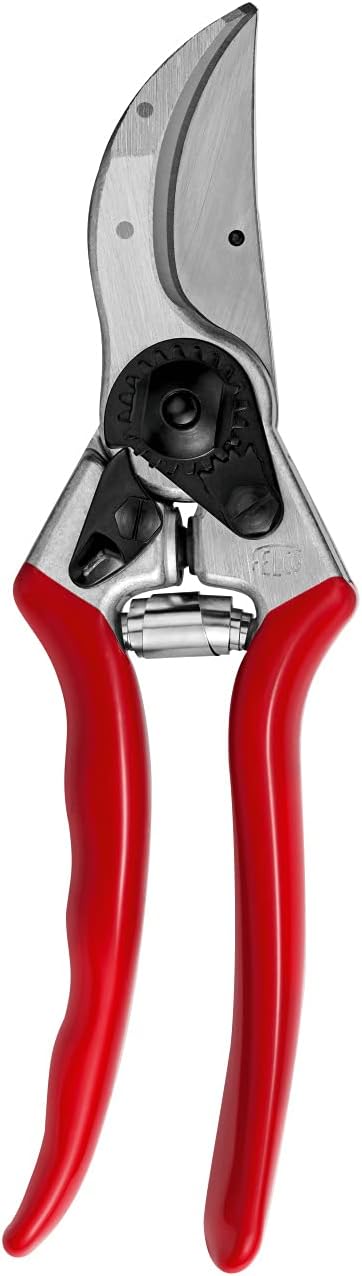
Felco has been making this exact pruner since 1945, and it's become the tool professional arborists and orchardists reach for by default. What sets it apart isn't flash — it's that every part is designed to be serviced rather than thrown away. The hardened steel blade holds an edge through heavy seasonal use, and when it eventually dulls, it's replaceable rather than a reason to buy a whole new tool.
The handle tension is adjustable, so you can tighten or loosen the pivot to match the resistance you prefer, and rubber shock absorbers cut down on hand fatigue during long pruning sessions. It's fully ambidextrous, which matters more than it sounds — plenty of cheaper shears quietly assume a right-handed grip. With thousands of positive reviews across major retailers, it's the rare tool that lives up to its reputation.
Specifications
- Blade material: Hardened steel
- Handle material: Forged aluminum
- Weight: 8.8 oz
- Safety features: No lock, but shock-absorbing bumper included
- Extras: Adjustable blade tension, replaceable parts
Pros
- Field-proven design with an 80-year track record
- Replaceable blade extends the tool's usable life for years
- Adjustable tension lets you dial in the feel
- Fully ambidextrous
Cons
- No safety lock, unlike several competitors here
- Heavier than the lightest models on this list
- Premium price relative to budget alternatives
2. Gonicc 8" Professional SK-5 Pruning Shears

Gonicc's SK-5 steel blade delivers cutting power that generally shows up on pruners costing quite a bit more, and the sap groove design is a genuinely clever touch — it channels sap and plant debris away from the pivot so the blades don't gum up and stick mid-cut, which is a common annoyance with budget shears.
A built-in safety lock secures the blades closed for storage and transport, protecting both the edge and whoever's reaching into the tool bag next. The non-slip rubber handle holds up well during longer sessions, though a few users with larger hands find the grip a touch tight. For the price, it's hard to find a pair that cuts this well.
Specifications
- Blade material: SK-5 steel
- Handle material: Non-slip rubber
- Weight: 7.2 oz
- Safety features: Integrated safety lock
- Extras: Sap groove prevents blade sticking
Pros
- SK-5 steel offers strong cutting power for the price
- Sap groove keeps blades from gumming up
- Safety lock included
Cons
- Safety lock can be fiddly to operate with gardening gloves on
- Handle runs a little rigid for some users
- Not the best fit for larger hands
3. ARS HP-130DX 7-Inch Light Pruning Shear

At just 5.6 ounces, the ARS HP-130DX is noticeably lighter than every other pair on this list, which translates directly into less hand fatigue across a long pruning session — a real advantage if you're working through a large garden or maintaining rows of shrubs. The high-carbon steel blade carries a hard chrome finish that resists rust and reduces friction as it slides through stems.
The bright-colored handles are a small detail that pays off constantly: it's the tool you're most likely to set down in the grass and lose, and ARS makes it genuinely easy to spot again. A simple lever lock handles safety without adding bulk. It's best suited to lighter, more frequent pruning tasks rather than heavy-duty work.
Specifications
- Blade material: High-carbon steel, hard chrome finish
- Handle material: Hard plastic
- Weight: 5.6 oz
- Safety features: Simple lever lock
- Extras: Feather-light build, bright handle color
Pros
- Lightest shears on this list — minimal hand fatigue
- Razor-sharp blade with rust-resistant chrome finish
- Bright handles are easy to find in foliage
Cons
- Not built for thicker branches
- Plastic handles feel less durable than metal alternatives
- Lock mechanism can feel stiff at first
4. Corona BP 3180D Forged Classic Bypass Pruner

The Corona BP 3180D is built from forged steel alloy, which gives it a rugged, heavy-duty feel that holds up to repeated, demanding use season after season. Its MaxForged cutting system is engineered to keep the edge sharper for longer, meaningfully cutting down on how often you need to touch it up with a file or stone.
A wire-cutting notch near the pivot lets you snip garden wire or twine without risking the main blade — a small feature that saves real wear over time. The full-sized grip is deliberately built for larger hands, which sets it apart from most of the compact designs on this list, and a shock-absorbing bumper softens the impact on repetitive cuts.
Specifications
- Blade material: Forged steel alloy
- Handle material: Non-slip grip
- Weight: 1 lb
- Safety features: No safety lock
- Extras: Wire-cutting notch, full-sized adult grip
Pros
- Forged steel construction built for heavy, repeated use
- Wire-cutting notch adds real versatility
- Full-sized grip is genuinely comfortable for large hands
Cons
- Heaviest pair on this list
- No safety lock
- Needs more frequent oiling to stay rust-free
5. Fiskars Steel Bypass Pruning Shears

Fiskars backs this all-steel bypass pruner with a lifetime warranty, which says something about how confident the company is in the build — and reviewers consistently confirm the blade holds its edge for years of regular use. The precision-ground blade produces clean cuts that support healthy plant recovery, and a low-friction coating helps it glide through stems without gumming up with sap.
The easy-open lock does double duty: it keeps the tool closed and safe in storage, and it protects the blade edge from nicking against other tools in a garden bag. The all-steel handle is sturdier than the plastic-handled options here, though that trade-off means it runs a bit heavier and offers no tension adjustment.
Specifications
- Blade material: Steel, precision-ground
- Handle material: All steel
- Weight: 10.4 oz
- Safety features: Easy-open lock
- Extras: Low-friction coating, lifetime warranty
Pros
- Backed by a genuine lifetime warranty
- All-steel build offers exceptional durability
- Low-friction coating resists sap buildup
Cons
- No tension adjustment
- Runs large for smaller hands
- Thicker branches take noticeably more effort
6. GARTOL Bypass Pruning Shears

GARTOL's standout feature is an adjustable hand width, which makes it the most accommodating pair on this list for gardeners with smaller hands — a group that's genuinely underserved by most standard-sized pruners. The SK-5 carbon steel blade delivers efficient, precise cuts comparable to the pricier options here.
A built-in spring mechanism reopens the blades automatically after each cut, meaningfully reducing hand strain over a long pruning session, and the non-slip handle adds security during use. It also ships with a safety lock for secure storage. Between the adjustable grip and the spring-assist action, it's a strong pick for anyone who prunes frequently but finds standard-sized shears tiring.
Specifications
- Blade material: SK-5 carbon steel
- Handle material: Non-slip handle
- Weight: 7.4 oz
- Safety features: Safety lock included
- Extras: Adjustable hand width, spring-assisted reopening
Pros
- Adjustable hand width suits smaller hands
- Spring design reduces fatigue over long sessions
- SK-5 blade cuts efficiently for the price
Cons
- Safety lock placement isn't the most convenient
- Not intended for thicker branches
- May need more frequent sharpening under heavy use
Quick Comparison
| Model | Blade | Weight | Safety Lock | Standout |
|---|---|---|---|---|
| Felco F-2 | Hardened steel | 8.8 oz | No | Replaceable parts, 80-year track record |
| Gonicc 8" SK-5 | SK-5 steel | 7.2 oz | Yes | Sap groove, strong value |
| ARS HP-130DX | High-carbon steel | 5.6 oz | Yes | Lightest on the list |
| Corona BP 3180D | Forged steel alloy | 1 lb | No | Full-sized grip, wire notch |
| Fiskars Steel Bypass | Steel | 10.4 oz | Yes | Lifetime warranty |
| GARTOL Bypass | SK-5 carbon steel | 7.4 oz | Yes | Adjustable hand width |
Why a Good Pair of Shears Actually Matters
It's tempting to treat pruning shears as a commodity — any pair that closes on a stem seems like it should do the job. In practice, blade quality changes plant outcomes, not just your own comfort. A clean bypass cut seals and heals quickly; a crushed or torn cut from a dull or mismatched tool leaves an opening that's slower to close and more vulnerable to disease and pests. Regular pruning with a sharp, well-maintained pair also improves air circulation through the plant, encourages new growth, and — for fruiting plants — redirects energy toward producing more flowers or fruit rather than maintaining excess foliage. There's a safety angle too: overgrown branches near a home or walkway are a real hazard in storms, and keeping them in check is far easier with a tool that doesn't fight you on every cut.
What to Look for Before You Buy
Match the tool to the task
Bypass shears for live green stems, anvil for dead or dry wood. Using the wrong type is the most common cause of disappointing cuts.
Check the blade steel
Hardened, forged, or SK-5 carbon steel all hold an edge well and resist rust better than generic stamped steel.
Consider your hand size and grip strength
An adjustable-width or lightweight model matters more than spec sheets suggest if you're pruning for more than a few minutes at a time.
Decide if a safety lock matters to you
Useful for storage and transport, but some locks are awkward to operate one-handed or with gloves — check reviews for that specific complaint.
Think about long-term maintenance
Replaceable blades (like Felco's) and lifetime warranties (like Fiskars') extend a tool's usable life well beyond the sticker price.
How to Keep Your Shears Cutting Cleanly
Even the best pruning shears will start tearing rather than cutting if they're neglected. After each use, wipe the blades down to remove sap and plant residue, since dried sap is what usually causes sticking. A drop of light oil on the pivot every few uses keeps the action smooth. Sharpening frequency depends on how often you prune — for regular home use, touching up the edge once or twice during the main growing season is usually enough, using a sharpening stone or a dedicated garden tool sharpener along the original blade angle.
If a pair starts leaving ragged, torn cuts even after sharpening, check for two things before assuming the blade is the problem: rust or grime buildup on the pivot, and slack in the tension adjustment (on models that offer it). Both are far more common culprits than a genuinely worn-out blade.
Frequently Asked Questions
How often should I sharpen my pruning shears?
For regular home gardening, sharpening once or twice during the main pruning season is typically enough. Heavy or daily use calls for more frequent touch-ups with a sharpening stone.
Bypass or anvil — which should I actually buy?
Bypass shears are the better all-around choice for most home gardeners, since most pruning involves live, green stems where a clean scissor-style cut matters. Reach for anvil shears specifically for dry or dead wood.
Can pruning shears cut thick branches?
Most hand pruning shears are rated for branches up to about ¾ inch in diameter. For anything thicker, switch to loppers or a pruning saw rather than forcing the shears — you'll damage both the tool and the plant.
Why aren't my shears cutting cleanly anymore?
A dull blade is the most common cause, but dirt, dried sap, or light rust on the pivot can also make a sharp blade tear instead of slice. Clean and oil the pivot before assuming you need to resharpen.
Can I replace the blade instead of buying new shears?
Many higher-quality pruners, including the Felco F-2 on this list, are designed with replaceable blades. Check the manufacturer's site or product manual — it's often far cheaper than replacing the whole tool.
What size shears should I buy?
This comes down to hand size and strength more than any universal standard. Look for adjustable hand width or a notably lightweight design if standard sizing has felt uncomfortable in the past.
Is a safety lock actually necessary?
It's not essential for cutting performance, but it's a genuinely useful feature for anyone storing shears in a bag with other tools, or gardening around children or pets.
There's no single "best" pruning shear for every gardener — the right pick depends on what you're cutting, how often, and how your hands hold up over a long session. The Felco F-2 remains the gold standard for a reason, but the Gonicc 8" delivers most of that performance for a fraction of the price, and the GARTOL's adjustable grip solves a real problem for smaller hands that most manufacturers ignore. Whichever pair you choose, the single biggest upgrade you can make to your gardening isn't a fancier tool — it's keeping the blade clean and sharp, since that's what actually determines whether your cuts help your plants heal or slow them down.
If you're building out a full outdoor living space this season, a sharp pair of shears pairs naturally with the rest of your outdoor furniture and garden setup — keeping planting beds tidy makes just as much difference to curb appeal as the seating around them.


.png)
No comments:
Post a Comment