


The wrong mattress won't cause sciatica, but it can absolutely make every night with it worse
Sciatic pain has a way of turning bedtime into the part of the day you dread instead of look forward to. Every mattress claims to be "supportive," but for someone managing sciatica, vague marketing language doesn't tell you anything useful — what actually matters is firmness level, how well a mattress maintains spinal alignment, and how evenly it distributes weight so pressure doesn't concentrate along your lower back and hips. We looked at six well-reviewed mattresses on those specific, checkable factors, rather than repeating the same generic comfort claims every mattress brand makes.
Quick verdict: for most sciatica sufferers, a medium-firm hybrid mattress offers the best balance of pressure relief and spinal support. The Tempur-Pedic TEMPUR-Adapt is the strongest all-around pick if budget allows; the Nectar Memory Foam is the best value with its 365-night trial; and the Saatva Classic is the top choice if you want to fine-tune firmness yourself.
Why Firmness Matters More Than Material
It's tempting to shop by material alone — "memory foam" or "hybrid" — but for sciatica specifically, firmness level is the variable that does the most work. A mattress that's too soft lets your hips sink out of alignment with your shoulders, which can increase pressure on the sciatic nerve as it runs from your lower back down through the hip. One that's too firm fails to relieve pressure at the hips and shoulders at all, creating new pain points. Medium-firm is the range that shows up repeatedly across sleep research and physical therapy guidance for lower back and sciatic pain, because it strikes a balance: enough give to relieve pressure points, enough resistance to keep the spine from bowing out of alignment.
Memory Foam
Contours closely to relieve pressure at the hips and lower back. Look for medium-firm specifically — soft memory foam can let hips sink too deep.
Hybrid
Combines a coil support base with a foam comfort layer. Generally the strongest all-around choice for sciatica, balancing contouring with firmer underlying support.
Innerspring
More bounce and better airflow, but less pressure relief unless paired with a plush comfort layer, as in coil-on-coil designs like Saatva's.
Grid / Latex-Hybrid
Responsive designs like Purple's grid layer adapt instantly to pressure without the "sinking" feel of foam, while staying naturally cooler.
Our Top Picks
Best Overall1. Tempur-Pedic TEMPUR-Adapt Medium Hybrid Mattress

Tempur-Pedic pairs premium spring coils with its signature TEMPUR material to strike a genuinely balanced medium firmness — soft enough to contour to your body and relieve pressure along the sciatic nerve's path, firm enough underneath to keep your spine from sagging out of alignment. That combination is exactly what sciatica-focused sleep guidance tends to recommend, rather than chasing extreme softness or extreme firmness.
The cool-to-touch cover addresses a common complaint with dense foam mattresses — overheating — so you're not trading pressure relief for a hot night's sleep. It's a premium price, but the 10-year warranty and the brand's decades of orthopedic-focused engineering make it a defensible investment if sciatica is genuinely disrupting your sleep.
Specifications
- Type: Hybrid
- Firmness: Medium
- Material: TEMPUR material over premium spring coils
- Cooling: Cool-to-touch cover
- Sizes: Twin through Split California King
- Warranty: 10 years
Pros
- Conforms closely to relieve pressure on the sciatic nerve
- Hybrid design balances contouring with real support
- Cool-to-touch cover avoids the overheating common in dense foam
Cons
- Some sleepers find it firmer than expected
- Premium price point
- Heavier individuals may find support diminishes over time
2. Puffy Lux Hybrid Mattress
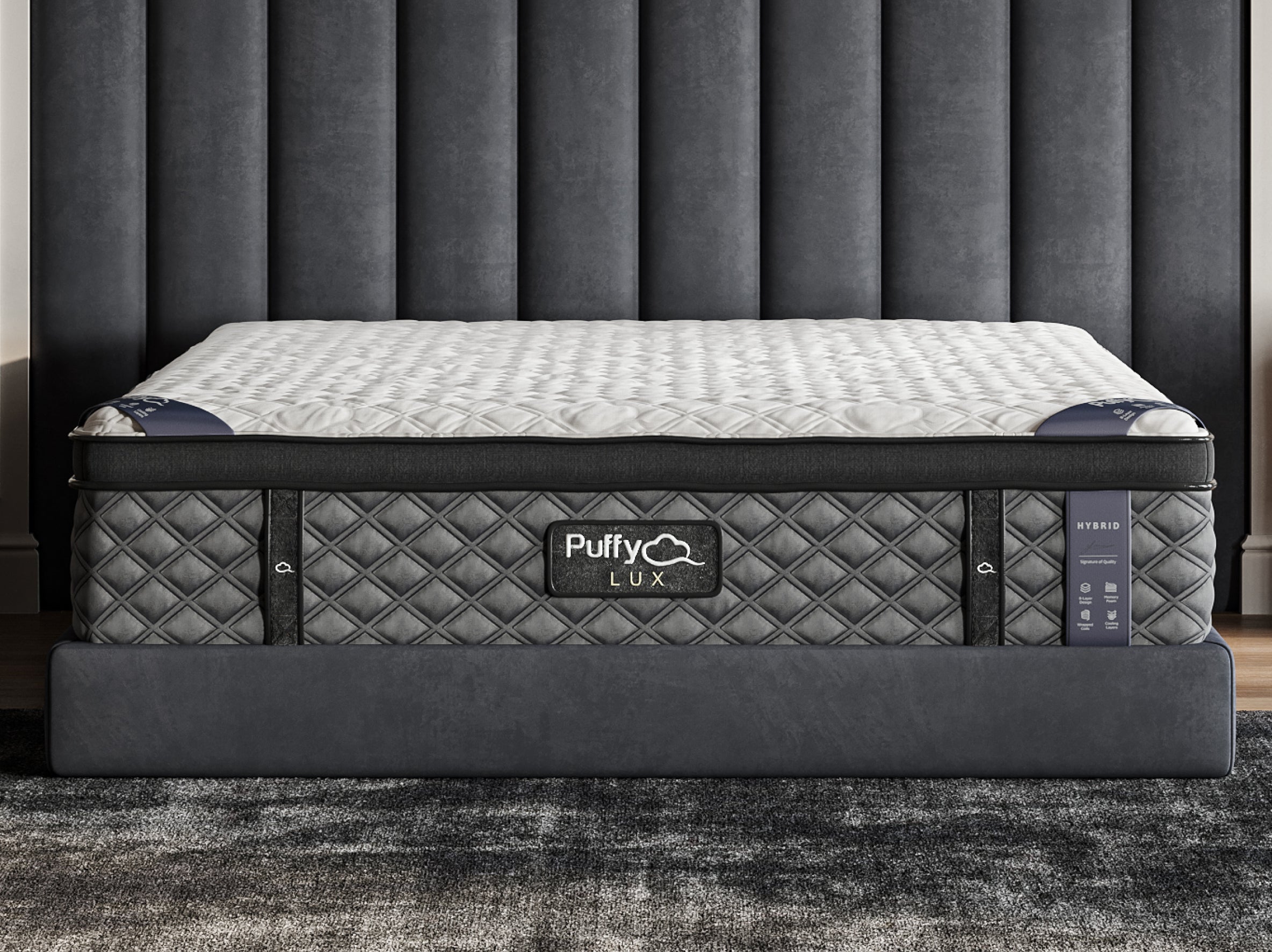
Puffy Lux builds its case for sciatica sufferers through sheer layer count: a Cooling Cloud foam layer for breathability, a Body Adapting Dual Cloud layer for custom pressure relief, a Firm Core Support layer specifically for spinal alignment, and a Contour-Adapting base. The result is a mattress engineered to distribute body weight evenly, which is exactly what reduces the concentrated pressure points that tend to aggravate sciatic pain.
Where this mattress earns real trust is its policies — a lifetime warranty and a genuinely long 101-night trial, which matters enormously for a purchase this personal. Firmness preference for pain conditions is hard to judge in a day or even a week; a trial this long gives your body time to actually tell you whether it's working.
Specifications
- Type: Hybrid
- Firmness: Medium
- Material: Four-layer foam system over a support core
- Cooling: Cooling Cloud foam layer
- Sizes: Twin through California King
- Warranty: Lifetime
Pros
- Four-layer design balances support and pressure relief
- Distributes weight evenly, easing pressure points
- Lifetime warranty and 101-night trial
Cons
- May feel too soft for firm-mattress preference sleepers
- Edge support is softer than the center
- Takes a few days to fully expand after unboxing
3. Nectar Memory Foam Mattress

Nectar's five-layer foam construction — quilted gel memory foam, gel memory foam for heat distribution, an adaptive response transition layer, and a stability base — lands at a medium-firm feel that's frequently cited as the sweet spot for sciatica. The close body contouring specifically reduces pressure on the sciatic nerve rather than just cushioning it.
What genuinely sets Nectar apart is confidence backed by policy: a 365-night home trial (a full year to decide) and a forever warranty. For anyone nervous about committing to a mattress purchase while managing a pain condition, that's about as much room to change your mind as this category offers.
Specifications
- Type: Memory foam
- Firmness: Medium-firm
- Material: Quilted gel memory foam over adaptive response and base layers
- Cooling: Gel memory foam layer
- Sizes: Twin through California King
- Warranty: Forever
Pros
- Excellent body contouring reduces sciatic nerve pressure
- 365-night trial is the longest on this list
- Forever warranty backs long-term durability
Cons
- Mild off-gassing smell reported when new
- May run too firm for dedicated side sleepers
- Can sleep warmer than hybrid alternatives
4. Saatva Classic Mattress
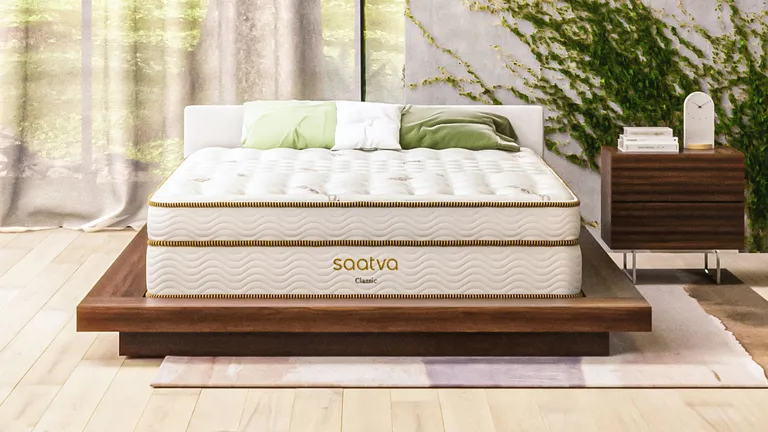
Saatva takes a different approach from the foam-heavy mattresses on this list: a coil-on-coil innerspring system with a plush top layer and a firmer support layer underneath, offered across three customizable firmness levels — plush soft, luxury firm, and firm. That flexibility matters, because sciatica presentation genuinely varies from person to person, and Saatva lets you actually choose your firmness rather than guess based on a single fixed model.
A 180-night home trial and 15-year warranty back the purchase, and the coil-based design tends to sleep noticeably cooler than dense all-foam mattresses, which is worth factoring in if you run hot at night.
Specifications
- Type: Hybrid innerspring
- Firmness: Plush soft, luxury firm, or firm (customizable)
- Material: Coil-on-coil innerspring system
- Cooling: Organic cotton cover
- Sizes: Twin through California King
- Warranty: 15 years
Pros
- Customizable firmness lets you match your specific needs
- Coil-on-coil design sleeps cooler than dense foam
- Long 180-night trial and 15-year warranty
Cons
- Even "plush soft" runs firmer than some foam mattresses
- Edge support may be softer than expected near the perimeter
- Durability reports are mixed among some long-term owners
5. Amerisleep AS3 Mattress

The Amerisleep AS3 leans on what the brand calls HIVE technology — a zoned support layer that provides firmer support under the hips and shoulders specifically, while staying softer elsewhere. That kind of targeted, zoned support is worth calling out for sciatica in particular, since the goal isn't uniform softness, it's relieving pressure exactly where you need it while still holding your spine level.
Its three-layer build — a Bio-Pur comfort layer, a transition layer that prevents excess sinking, and a Bio-Core support base — keeps the medium feel consistent across body types. A 100-night trial and an unusually long 20-year warranty round out a genuinely strong package for the price.
Specifications
- Type: Memory foam
- Firmness: Medium
- Material: Bio-Pur comfort layer over transition and Bio-Core base layers
- Cooling: Open-cell Bio-Pur foam
- Sizes: Twin through Split King and California King
- Warranty: 20 years
Pros
- Zoned HIVE support targets pressure at hips and shoulders
- Three-layer build balances comfort and support
- Exceptional 20-year warranty
Cons
- May feel too soft for firm-preference sleepers
- Some owners report it sleeps warmer than expected
- Priced above most other memory foam options here
6. Purple Hybrid Mattress
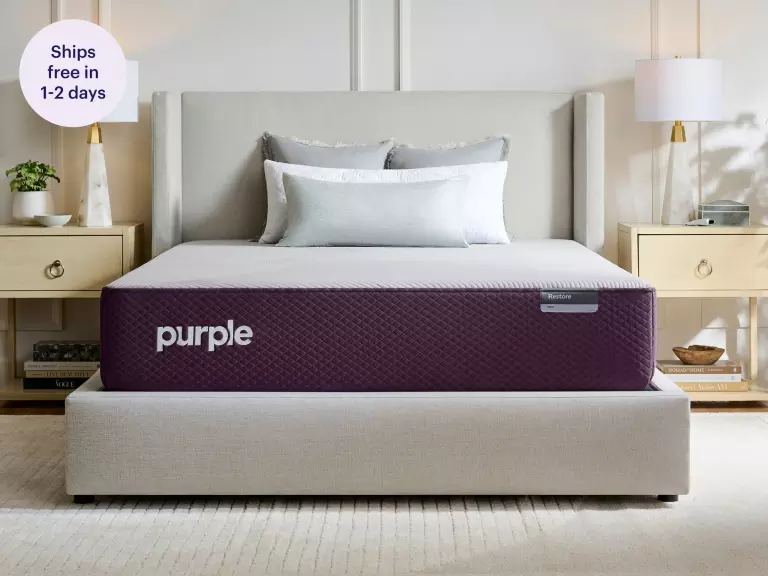
Purple's signature grid layer works differently from foam — it flexes instantly under pressure rather than slowly conforming, which avoids the "stuck in a hole" feeling some foam mattresses create for side and combination sleepers. That responsive, adaptive support is genuinely useful for sciatica, since it customizes to your exact pressure points in real time rather than a fixed, one-size firmness.
The open grid structure also promotes airflow far better than dense foam, so it's a strong option if you sleep hot. Paired with a responsive support coil layer underneath, it offers a 100-night trial and 10-year warranty — solid, if not exceptional, compared to some others on this list.
Specifications
- Type: Hybrid
- Firmness: Medium-firm
- Material: Purple Grid layer over a responsive support coil system
- Cooling: Purple Grid layer for airflow
- Sizes: Twin XL through California King
- Warranty: 10 years
Pros
- Grid layer provides customized, real-time pressure support
- Excellent airflow keeps it cool overnight
- 100-night trial and 10-year warranty
Cons
- The grid's unique feel isn't for everyone
- Some sleepers find it firmer than expected
- Priced at the higher end of this list
Quick Comparison
| Mattress | Type | Firmness | Trial | Warranty |
|---|---|---|---|---|
| Tempur-Pedic TEMPUR-Adapt | Hybrid | Medium | Varies by retailer | 10 years |
| Puffy Lux Hybrid | Hybrid | Medium | 101 nights | Lifetime |
| Nectar Memory Foam | Memory foam | Medium-firm | 365 nights | Forever |
| Saatva Classic | Hybrid innerspring | Customizable | 180 nights | 15 years |
| Amerisleep AS3 | Memory foam | Medium | 100 nights | 20 years |
| Purple Hybrid | Hybrid | Medium-firm | 100 nights | 10 years |
What to Look for Before You Buy
Start with medium-firm
It's the most consistently recommended range for balancing pressure relief with spinal alignment for sciatica specifically.
Prioritize even weight distribution
Multi-layer foam or zoned support systems (like Amerisleep's HIVE) reduce the concentrated pressure points that can aggravate the sciatic nerve.
Use the full trial period
Firmness preference for a pain condition is genuinely hard to judge in the first few nights. Favor brands with 100+ night trials.
Factor in heat regulation
Dense memory foam traps heat more than hybrid or grid designs — worth weighing if you already sleep hot.
Pair it with the right pillow and sleep position
A supportive mattress works best alongside posture-conscious sleeping habits — see our guide to mattress toppers for side sleepers if side-sleeping is your default position.
Sciatica and Sleep: What Else Helps
A mattress is one piece of a larger picture. Supportive pillows that keep your spine level — a pillow between the knees for side sleepers, or under the knees for back sleepers — reduce the same kind of pressure a good mattress addresses. Gentle stretching before bed can loosen the muscles that often tighten around an irritated sciatic nerve, and adjusting your sleep position based on what a doctor or physical therapist recommends tends to matter more than any single product decision. If your sciatica overlaps with general lower back discomfort rather than nerve-specific pain, it's also worth reading our breakdown of the best mattress for hip pain, since the two conditions share a lot of the same firmness and support considerations.
Frequently Asked Questions
What type of mattress is best for sciatica?
A medium-firm mattress that supports spinal alignment while relieving pressure points is generally best. Memory foam and hybrid designs most consistently meet both requirements.
Can a mattress actually cause or worsen sciatica?
A mattress that lacks proper support can let your spine fall out of alignment overnight, which can aggravate existing sciatic pain. A supportive, appropriately firm mattress can help reduce that discomfort, though it works alongside — not instead of — medical treatment.
Should I choose a firm or soft mattress for sciatica?
Medium-firm is the range most consistently recommended. It provides support for spinal alignment while still relieving pressure at the hips and shoulders, which is the balance sciatica sufferers usually need.
Can a new mattress cure sciatica?
No — a mattress can meaningfully improve comfort and sleep quality, but it isn't a cure. Combined with appropriate medical care, it can reduce nighttime discomfort significantly.
What else can help sciatica pain at night?
Supportive pillows to maintain spinal alignment, gentle pre-bed stretching, and adjusting sleep position based on medical advice all complement a supportive mattress.
How often should I replace my mattress?
Generally every 7-10 years, though this depends on the mattress's quality, how it's used, and whether it's still providing adequate support and comfort.
Finding the right mattress for sciatica comes down to matching firmness, support, and your personal sleep position — there's no single model that works for everyone. The Tempur-Pedic TEMPUR-Adapt and Nectar are the strongest picks if you want proven pressure relief with minimal guesswork, Saatva is the one to choose if you'd rather dial in your own firmness, and Amerisleep's zoned support is worth a close look if your pain concentrates specifically at the hips. Whichever you choose, use the full trial period before deciding, and remember that a mattress supports a treatment plan — it isn't a substitute for one.


.png)
No comments:
Post a Comment