


Growing bodies need real support — not just a soft place to land at bedtime.
Choosing a mattress for a child is a different exercise than shopping for your own bed. Growing spines need consistent support, sensitive skin benefits from hypoallergenic materials, and the occasional spill or accident makes durability and easy care genuinely practical concerns, not luxuries. We compared six well-reviewed kids' mattresses on real, checkable details — firmness, materials, safety certifications, and genuine standout features — rather than repeating the marketing language every mattress brand uses.
Quick verdict: for most families, the Zinus Green Tea Memory Foam Mattress offers the strongest overall value with genuinely thoughtful odor-control design. If your child has allergies or sensitivities, the Classic Brands Cool Gel Memory Foam Mattress is the standout hypoallergenic pick. For a child transitioning from a crib to a big-kid bed, the Linenspa Hybrid's supportive medium-firm feel is an easy recommendation.
Why Firmness and Materials Matter More for Kids
A growing body needs different support than an adult one. Too-soft mattresses can let a child's spine curve out of alignment overnight, while overly firm ones create pressure points without the muscle mass to compensate the way an adult body can. Medium-firm is the range that comes up repeatedly across pediatric sleep guidance for a reason — it's firm enough to support healthy spinal alignment through the growing years, while still relieving pressure at the hips and shoulders. Material safety carries extra weight too: children spend more hours asleep relative to their body size than adults, so certifications like CertiPUR-US, which limit volatile organic compound emissions in foam, are worth prioritizing over marketing claims alone.
Memory Foam
Contours to a child's body for pressure relief. Look for CertiPUR-US certification and gel infusions that help regulate sleep temperature.
Hybrid (Foam + Innerspring)
Combines coil support with a foam comfort layer, often the most balanced choice for a child transitioning from a crib mattress to a bigger bed.
Innerspring
Traditional bounce and strong edge support, generally more breathable than all-foam designs, though usually firmer underfoot.
Our Top Picks
Best for the Crib-to-Bed Transition1. Linenspa 8 Inch Memory Foam and Innerspring Hybrid Mattress

The Linenspa Hybrid blends the traditional bounce of an innerspring bed with a comfort layer of memory foam, which makes it a genuinely smooth transition for a child moving up from a crib mattress to something closer to an adult bed feel. The memory foam layer follows the body's natural curves for pressure relief, while the steel coils underneath add stability and help air circulate, avoiding the trapped-heat feeling some all-foam mattresses have.
Its medium-firm feel accommodates side, back, and stomach sleepers reasonably well, which matters since kids rarely stick to one sleep position all night. A knit cover adds a bit of polish, and overall it's a dependable, well-priced choice for a first "real" mattress.
Specifications
- Materials: Memory foam comfort layer over steel innerspring coils, knit cover
- Firmness: Medium-firm
- Care: Spot clean
Pros
- Combines innerspring bounce with plush memory foam comfort
- Supports proper spinal alignment across sleep positions
- Knit cover adds a touch of elegance
Cons
- Might feel a bit firm for some children
- Springs can become noticeable with heavy, years-long use
- Limited thickness options
2. Zinus Green Tea Memory Foam Mattress

Zinus's standout feature is genuinely practical for a kid's room: green tea extract and activated charcoal infused directly into the memory foam actively work to neutralize odors, which matters more than it sounds in a room prone to spills, sweat, and the occasional pet visit. The four-layer design pairs a high-density support base with three layers of pressure-relieving comfort foam, producing a "floating" feel that also reduces motion transfer — useful if siblings share a room or a restless sleeper tends to toss and turn.
CertiPUR-US certification confirms the foams are free from harmful substances commonly flagged in cheaper foam products, and the plush-yet-firm balance suits a range of sleep positions. It's a strong value pick that doesn't cut corners on safety.
Specifications
- Materials: Green tea and ActivCharcoal-infused memory foam, three comfort layers, high-density support base
- Certifications: CertiPUR-US certified
- Care: Spot clean
Pros
- Green tea and charcoal infusion actively resists odors
- Four-layer foam design reduces motion transfer
- CertiPUR-US certification confirms safer materials
Cons
- May be too firm for smaller or lighter children
- Noticeable off-gassing odor when first unboxed
- Can take up to 72 hours to fully expand
3. Classic Brands Cool Gel Memory Foam Mattress

Classic Brands built this mattress specifically around temperature regulation and allergen resistance, which makes it a genuinely strong pick for a child with sensitivities. The self-ventilating cool gel memory foam top layer contours to the body while actively working against the heat buildup that can disturb sleep, and a high-density foam base underneath provides the stability growing bodies need.
Its hypoallergenic construction resists common allergens, dust mites, and bacteria — a genuine advantage for kids prone to congestion or skin sensitivities. CertiPUR-US certification confirms it's free from the harmful chemicals sometimes found in cheaper foam. The main trade-off is firmness on the higher end, which won't suit every child's comfort preference.
Specifications
- Materials: Self-ventilating cool gel memory foam top layer, high-density foam base
- Certifications: CertiPUR-US certified, hypoallergenic
- Care: Spot clean
Pros
- Gel-infused foam promotes cooler, more comfortable sleep
- Hypoallergenic, ideal for kids with allergies or sensitivities
- High-density base provides stability and alignment
Cons
- Initial chemical smell may take a few days to dissipate
- May be too firm for children who prefer a softer surface
- Some owners report sagging over time
4. Nest Bedding BKB - Big Kids Bed Mattress
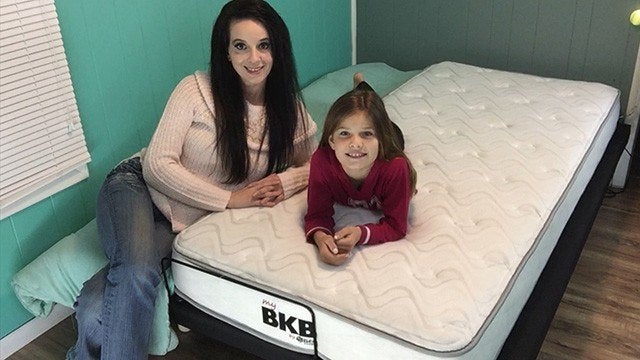
Unlike the other mattresses on this list, which are general-purpose foam mattresses that happen to work well for kids, the Nest Bedding BKB is purpose-designed specifically for children and teens. Its CertiPUR-US certified Energex foam is calibrated for a firmness level suited to growing bodies during their most important developmental years, balancing responsiveness with contouring comfort rather than defaulting to a generic adult firmness scale.
A breathable cover helps regulate temperature to prevent overheating, and the mattress is manufactured entirely in the USA, which speaks to consistent quality control. Being purpose-built comes with trade-offs: it's pricier than general-purpose alternatives, offered in only one firmness level, and limited to twin and full sizes.
Specifications
- Materials: CertiPUR-US certified Energex foam, breathable cover
- Sizes: Twin and full only
- Origin: Made in the USA
Pros
- Purpose-designed for children with optimal firmness
- Energex foam balances responsiveness and comfort
- Breathable cover aids temperature regulation
Cons
- Priced higher than general-purpose alternatives
- Limited to one firmness level
- Only available in twin and full sizes
5. Sealy Response Performance Innerspring Mattress

Sealy brings its established Posturepedic Technology to this innerspring mattress, engineering the coil system to provide reinforced support specifically where the body's heaviest points rest — a detail that matters as much for a growing child's alignment as it does for an adult. The traditional innerspring feel is paired with SealyCushion Air Foam, adding softness on top while promoting airflow through the mattress.
A moisture-wicking cover helps keep the sleep surface cool and dry, and the mattress is designed and built in the USA to defined quality standards. It runs firmer and heavier than the foam options on this list, and sits at a higher price point, but the engineered support is a genuine differentiator.
Specifications
- Materials: Posturepedic Technology coil system, SealyCushion Air Foam, moisture-wicking cover
- Type: Innerspring
- Origin: Designed and built in the USA
Pros
- Posturepedic Technology offers reinforced, targeted support
- SealyCushion Air Foam adds softness and promotes airflow
- Designed and built in the USA to high standards
Cons
- Some children may find it too firm
- Heavier and harder to rotate than foam alternatives
- On the higher end of the price spectrum
6. Lucid 10 Inch Gel Memory Foam Mattress

Rounding out this list, the Lucid 10-inch mattress pairs a gel-infused memory foam top layer with a dense support foam base, landing at a medium-firm feel well-suited to a child transitioning into a bigger bed. The gel infusion does real work regulating temperature while the foam contours to the body, and a moisture-wicking Tencel blend cover adds breathability that plain polyester covers can't match.
It's hypoallergenic, making it a reasonable option for kids with mild sensitivities, and CertiPUR-US certification backs up its safety claims. Like most compressed foam mattresses, it needs time to fully expand after unboxing, and a small number of owners report firmness softening somewhat with years of use.
Specifications
- Materials: Gel-infused memory foam top layer, dense support foam base, Tencel blend cover
- Certifications: CertiPUR-US certified, hypoallergenic
- Firmness: Medium-firm
Pros
- Gel-infused foam regulates temperature and contours the body
- Dense foam base provides excellent support
- Hypoallergenic, moisture-wicking Tencel blend cover
Cons
- Takes time to fully expand after unboxing
- Could be too firm for some children
- Some owners report decreased firmness over time
Quick Comparison
| Mattress | Type | Standout |
|---|---|---|
| Linenspa Hybrid | Foam + innerspring | Best crib-to-bed transition |
| Zinus Green Tea | Memory foam | Odor-resistant, strong value |
| Classic Brands Cool Gel | Memory foam | Hypoallergenic, cooling |
| Nest Bedding BKB | Foam | Purpose-built for kids and teens |
| Sealy Response Performance | Innerspring | Posturepedic targeted support |
| Lucid 10-Inch Gel | Memory foam | Cooling, hypoallergenic cover |
What to Look for Before You Buy
Prioritize medium-firm support
Growing spines need enough firmness to stay aligned overnight, without so much rigidity that it creates uncomfortable pressure points.
Check for CertiPUR-US certification
This confirms the foam is free from harmful chemicals and low in VOC emissions — worth prioritizing given how many hours kids spend asleep.
Consider allergies and sensitivities
Hypoallergenic materials that resist dust mites and common allergens can meaningfully improve sleep quality for sensitive kids.
Think about spill and accident resistance
A moisture-resistant cover or a washable mattress protector saves real headaches, especially for younger children still prone to nighttime accidents.
Match the size to the room and the bed frame
Twin and Twin XL suit most kids' rooms; older children may benefit from a Full if space allows.
Frequently Asked Questions
What is the right mattress size for my child?
This depends on your child's age, size, and the room's available space. Twin or Twin XL are the most common choices, though older children might benefit from a Full size.
How firm should a child's mattress be?
Generally, medium-firm provides the best balance of support for a growing body and proper spinal alignment, though individual comfort preference still plays a role.
What materials are best for a child's mattress?
High-quality memory or latex foam and innerspring systems are both common choices. Look for CertiPUR-US certified foam to confirm it's free from harmful chemicals.
When should I replace my child's mattress?
Most good-quality mattresses last 7-10 years, but if your child has outgrown it or it shows signs of wear like sagging or lumps, it's time for a replacement.
Are hypoallergenic mattresses necessary for children?
If your child has allergies or asthma, a hypoallergenic mattress that resists dust mites can genuinely help improve sleep quality and reduce symptoms.
Do all mattresses emit a chemical smell when new?
Some, especially memory foam models, can emit a slight odor known as off-gassing when first unpacked. This typically fades within a few days and isn't harmful, though CertiPUR-US certification limits how much VOCs a mattress can emit.
The right mattress for a child comes down to balancing support, safety, and their individual sensitivities. The Zinus Green Tea is the strongest all-around pick for most families, the Classic Brands Cool Gel is worth prioritizing for kids with allergies, and the Nest Bedding BKB is the one to choose if you want a mattress purpose-built for a child's developmental years rather than a general-purpose foam bed. Whichever you choose, medium-firm support and CertiPUR-US certification are the two details worth never compromising on.
If your child's room also deals with dry winter air, a good humidifier is worth pairing with the right mattress for a genuinely healthier sleep setup. And if you're furnishing more than one bedroom, our guide to the best mattress for hip pain covers the adult side of the same buying decision.


.png)
No comments:
Post a Comment